From PTSD to Purpose: A Marine Built a Nonprofit Saving Veterans
Marine Corps veteran and former police officer who founded St. Michael's Warriors, a peer-support nonprofit for veterans and first responders · Marine Corps
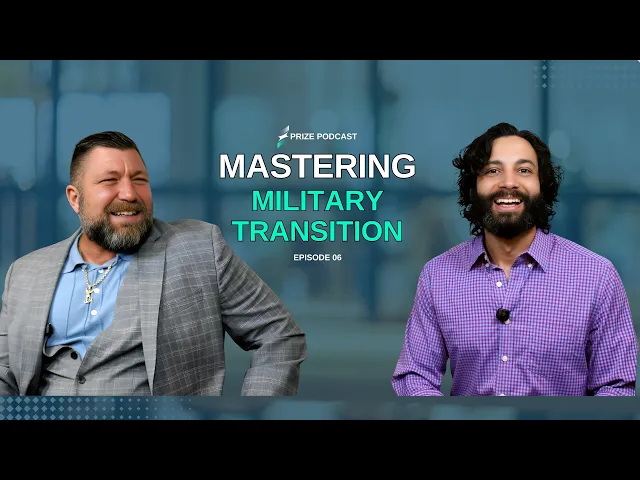
This episode is age-restricted on YouTube for language and content, so it plays there rather than here. Signing in to YouTube is required.
David Alercia served four years in the Marine Corps, at Kings Bay and as a scout with 3rd Light Armored Reconnaissance, then became a police officer in Slatington, Pennsylvania. He tells PJ how telling his own story became his way back, and why he founded St. Michael's Warriors to give veterans and first responders peer support and vetted resources.
This episode is age-restricted on YouTube for language and content, so it plays there rather than here. Signing in to YouTube is required.
In David’s words
“Me telling my story and being able to tell my story is healing to me.”
“So I believe God put us on this ground for a purpose and everybody has a purpose and a reason.”
“But before I do, I want to know each individual story of what happened to you.”
“It's great giving that opportunity for them, but it's also kind of cheating because you're helping yourself at the same time and getting that satisfaction.”
Transcript
Lightly edited transcript from the episode audio
Speaker labels and mis-heard names are corrected by hand; the words are as spoken, filler and all.
Preview clips
David: Being able to tell my story is healing to me. Back in my head again, like, well, I need to go back in. For a long time, I felt guilt that I wasn't there with them. I not go over, my guys went over. This isn't right. She looks at that. She's like, what's that? I was like, wait, I'm going back in. You say it was okay. She's like, if you do that, we're done.
PJ: Hey, welcome to the Mastering the Military Transition series of the Prize podcast. My name is PJ, and I'll be your host. The purpose of this podcast is to share the story of those who have successfully transitioned out of the military so that you can see some of the tools and tricks necessary to have a successful transition of your own. That way, you don't have to stumble across some of the same things that I know that myself and my team at Prize had to struggle with ourselves.
At Prize, we believe in a world where all enjoy the freedom to grow. And that's why we're developing the Prize app. If you want to find out more, click on the prize.vet link in the show notes below. We hope that you enjoyed today's episode. Please like, subscribe, and if you have any feedback for us, please drop it in the comments.
Conversation
PJ: Hey, y'all. Welcome to our next episode here of the Prize podcast. Today, we have a special guest, David Alercia. David is a Marine Corps veteran. He was in for four years, served two years as security forces at Kings Bay, Georgia, yeah?
David: Yes, sir.
— Protecting nukes. Nukes, excuse me, not nukes. That'd be interesting.
PJ: And then two years at 3rd LAR, Light Armed Reconnaissance, as a scout. And then he also served as a former police officer at Slatington Borough in Lehigh County, and then was on the Lehigh County ERT. Your wife was also a police officer, Danielle. Served for 20 years as detective at the NYPD. And now, you are currently, you have St. Michael's Warriors, which we'll allow him to tell all about. I'm excited to hear about this. And you've been doing that for about two and a half years, right?
David: Yes, sir.
PJ: So, hey, I really appreciate you coming by. It means a lot. This podcast, the whole point, and I don't know how many you've seen before, but the idea is we're really trying to help veterans get through this transition process, which we know is a pain in the ass and it hurts. But there's growth on the other side of that, of which we both know, right?
David: For sure.
PJ: So, what I would love to do, if you wouldn't mind, if you could just start us off and just tell me how you became you. Like, this gentleman who is sitting here in front of me today, like, how did David become David?
David: It was a long, long road and travel, let me tell you. So, growing up, played sports, wrestling, football.
PJ: Knew it.
David: I wanted to be a cop. That was my profession I wanted to have from early on in years. My father was a firefighter and he was actually, before 911 systems came into effect, they actually dispatched for the police. So, the police would come into the firehouses.
PJ: Oh, interesting.
David: While my dad would cook the Italian food, you know?
PJ: Yeah, yeah.
David: So, they would come on break and eat and go back out. And I just always looked at helping people. It was always big for me. So, I knew I couldn't be a police officer at 18. You had to be 21 years of age.
PJ: Oh, interesting. I didn't know that.
David: Yeah. So, in that interim of that, I was like, well, what else but the military? So, I was only age 17 when I first went to take the ASVAB. 18, went back up, swore in. Not until I got home after swearing in did my parents know that I signed up.
PJ: Oh, boy.
David: Yeah. So, I did the delayed entry program and then went in the Marine Corps. I did four years. Nothing too eventful in my career because it was from 95 to 99. There was not much going on at that point in time. But the only thing that happened while I was at security forces was, you know, we all screw around when we're young and got to challenge everybody.
PJ: Right.
David: So, our post time was four hours on post, four hours on a react team, and then four hours of sleep. And five-day continuous rotation as that.
PJ: And in that interim, you're sleeping or eating. So, are you really getting four hours of sleep?
David: No, probably not. So, then our section would always go against another section, usually go out into the garage, and you would, before MMA was actual MMA, you would tap each other out and see who would tap out.
— Before McMats.
David: So, one guy they always picked me against was Lance Corporal Standish. Great dude, but he was towering six-foot-one.
PJ: Oh, wow.
David: 190. I was only 152 pounds at that point in time. And him and I would always go at it. Well, one day, I was on React. He was supposed to be on his sleep time. We went out to the garage. They paired us up, and we went at him. I put him in a chokehold. I don't even remember who won, tell you the truth.
PJ: Oh, no.
David: But, he then went on post later after that. I went on my downtime. And then I went on post, and he went to the React team. While I was on post, he went in cardiac arrest.
PJ: Oh, no.
David: Back at the compound. And so, I was on post. I couldn't relieve my post. And I was in medical field prior to the military. And I wanted to go there, but I couldn't.
PJ: Because, yeah, abandoned your post, right?
David: Right.
PJ: Right.
David: Never abandoned your post.
PJ: Yeah, I get that.
David: So, they rushed him to the hospital, and he wound up dying a couple days later.
PJ: Oh, my God, dude.
David: We actually had a funeral service on base prior to him going back home. He was from upstate New York. And so, for the longest time, I was like, no one knew what happened. And I'm thinking, oh, my God, did I do something?
PJ: Yeah.
David: Because we were just wrestling around and doing tap outs. So, I was like, shit. Never really told anyone. Obviously, everybody kept it quiet because you're not supposed to ass grab it.
PJ: Right. Right. Yeah.
David: Well, it turned out that he actually had an undiagnosed pre-existing injury health condition that was unaware of, and that's what causes him to pass.
PJ: Yeah.
David: So, that was the first two years. The first thing that I would say was one of my traumatic events for me, which I didn't know at the time that it even bothered me like that.
PJ: Sure.
David: And that's the crazy thing. You don't really recognize or know. Sometimes you just step over it thinking, okay, no big deal. And there's no after effects initially. Got to third light armor recon. And when I first got there, we started out probably for four or five months. And then we went on a mule over to Japan. And we were in Okinawa.
PJ: Crazy story, right?
David: So, we're, me and my other corporal, not so good mixed together.
PJ: Really?
David: Well, it comes to a softball game that they were going to have a company softball game in Japan while we were over there. And sure enough, him and I raised our hands and we're like, can we drink? And our first sergeant was like, well, it's a Saturday. It's not really formal. So, I guess I can't, if you want to bring beer, you can. If you really want to drink at nine o'clock in the morning.
— What is a marina? What a marina.
David: Yeah, hello. Yep. So, we're carrying coolers of beer down for sure. And before we're supposed to start the game, all of a sudden, they're like, company formation now. And they literally went down the line and were like, you, you, you, and just picking people. And they're like, okay, go pack your shit. You're getting on shit. No one really knew at this time. And probably a lot of people to this day. In the 98, Saudi Arabia was acting up. So, they were going to be the first ones in.
They set four months off the coast of Saudi Arabia. So, if anything would go, that we had to get activated. I wasn't one of those picked, nor was my corporal, other corporal. And so, from that, we continued, the rest of us continued our training. We went to Guam, Tinean, and Fiji. And we did cross-training with other military groups and so forth. And during that time, I learned years later, two years ago, literally just two years ago that I found out about this, that I was like, yeah, you remember when we were over and a bunch of got on ship?
He's like, yeah. He's like, you know why we weren't picked, right? I was like, no. He's like, you don't remember? I was like, no. He's like, because I already opened it. I was like, oh.
PJ: Interesting.
David: Yeah. So, I mean, we would have been QRF more likely that we would have then got called back and would have been support for the initial hit in, but nothing happened. So, we got-
PJ: Initial hit in Saudi or-
David: In Saudi.
PJ: Yeah. Okay.
David: So, we got what became a six-month deployment became a nine months.
PJ: Sure.
David: Because they extended us over there. Came home and I got out of the Corps. When I first got out of the Corps, I was like, you know, I did teach some weapon systems while I was in there and had the opportunity to teach some weapon systems with our other team members and stuff. I was like, you know, that's kind of cool. A lot of my family members were teachers. At that point in time, I didn't know if I was going to be able to be a cop or not.
So, I was like, you know what? I'm going to go back to school and maybe go for education. My GPA quickly drastically dropped from a 3.0 to a 1.6.
PJ: Oof.
David: And that was because I started hanging around with the same crowd, the same people.
PJ: From high school, you mean?
David: Yeah.
PJ: Yeah, yeah.
David: And that mixes with everything and anything you do.
PJ: Right. You're going to fall in suit with what you're surrounded with.
David: Absolutely. So, I was like, what am I doing here? And at the time, I met a girl. I was engaged. And she's like, why don't you go back and do what you really wanted?
PJ: Was it be a police officer?
David: So, went to the police academy. During the police academy, 9-11 hits. So, I finished it out. And the funny thing out of that was then I also got a letter saying I needed to report. So, our local place was Wilkes-Barre. They were like, you need to report here. Make sure everything's up to date because you may be recalled. I was like, okay.
PJ: You mean like IRR?
David: Yeah.
PJ: Yeah. Okay.
David: And switch over to regular reserve.
PJ: Got it.
David: Yeah. So, nothing happened in that time frame. Completely did my other four years of the IR. So, in 2002, I became a police officer in the borough of Slatington. So, February 2002. So, in that time frame, I was back and forth. Maybe I should go. I wanted to sign back up at the reserve.
PJ: Yeah.
David: But, in the police world, you have what you call a probationary period where you're an at-will employee. And they can fire you at any time or let you go for any reason.
PJ: Oh, interesting. Okay.
David: Yeah. So, if I would have done that, more than likely I would have been deployed.
PJ: Mm-hmm.
David: And they wouldn't have kept my position.
PJ: Yeah.
David: They needed people. I don't know. It's a small department. So, they didn't have the manpower to just let somebody go for six months, four months, nine months.
PJ: Sure.
David: Whatever it would be.
PJ: Yeah.
David: So, I stuck it out. Started with my police career. Was doing very good. Still had the Marine Corps mentality. Work anything. Like, they'd be like, oh, you know, we need overtime. You need to work. Well, in the Marines or in the military, you don't get overtime. You don't hear that work. And so-
PJ: You mean work normal hours?
David: Holidays. Like, we didn't care about holidays anymore.
PJ: Right.
David: So, anytime I had a chance, I was working. I was making like $30,000 in overtime in my first couple years there.
PJ: Oh, wow.
David: Yeah. It was crazy. And it didn't bother me because I was getting the money and I was doing the job I love.
PJ: Right.
David: So, then from there, that goes on for a couple years. I wind up getting married, wind up divorced. When I go to a local pub, I happen to run into my old recruiter. Didn't know it was him. He calls out my name. I'm like, who would know me? And he calls me over. He's like, you're David Larson, right? I was like, yeah. He's like, I was your recruiter. I was like, oh, my God. So, we start talking.
PJ: Yeah.
David: Find out from him. Now, this is in about 2005.
PJ: Yeah, about 2005.
David: He lets me know that my old captain, Farr, from security forces, he actually got killed in action. He then also let me know that my unit was first boots on the ground when they declared war in 03.
PJ: Yeah. Oof.
David: So, a lot of people I served with, they were in their first year or two. So, they were still in and went over. So, for a long time, I felt guilt that I wasn't there with them.
PJ: Right.
David: I should have been there. I was cheated out of it. All these things. So, then it's back in my head again. Like, you know, I need to go back in. This isn't right. Why would I not go over? My guys went over. Right.
PJ: Right. So, in terms of that, I was like, meet another girl, actually have a child with her.
David: And we're on the outs, kind of. And I was like, look, I was like, I've been battling this for years. I was like, you mind if I go back in? She's like, that's what you need to do. I was like, okay, good enough. I go to the National Guard, knowing that they have a, which was crazy to me, that they have an SF in the reserves. Oh, I didn't know that.
PJ: I had no idea. Yeah.
David: So, I was like, all right, cool. So, I went in. I had it filled out the application. I had a $20,000 sign-on bonus. I told them I wanted the first deployable unit out. I wanted to be on the SF and do tryouts. They're like, yeah, absolutely. Everything good to go. Right.
PJ: Get home with that paperwork.
David: I still have it in my basement to this day. Wow.
PJ: Completed.
David: Yeah. She looks at that. She's like, what's that? I was like, I'm going back in.
PJ: You say it was okay.
David: She's like, if you do that, we're done. I was like, are you kidding me?
PJ: Yeah.
David: But everything happens for a reason, right?
PJ: Sure. Absolutely.
David: So, I didn't know that at the time. So, I did that and didn't go over. I didn't re-enlist.
PJ: So, sorry. You didn't then go.
David: So, I didn't go back in.
PJ: Got it. Got it.
David: And in turn, we started doing different training with different groups. One of the training groups was Northern Red. And all the guys from that training group that train police and military are ex-SF guys.
PJ: Mm-hmm.
David: Um, so I talked to them and they actually helped me get over that a little bit.
PJ: Yeah. Yeah. Yeah.
David: Because I was like, how did you be able to turn it off and stop?
PJ: Mm-hmm.
David: Like, and told them how my feelings were and what I did and how my unit was first boots on the ground. I was like, how could you stop? Like, how could you not go back over?
PJ: Right.
David: He's like, it was just my time.
PJ: Mm-hmm.
David: He's like, just like, it wasn't your time. He's like, if you would have been born two years later.
PJ: Absolutely.
David: You would have been over there.
PJ: Yeah, absolutely.
David: And he's like, so.
PJ: Right. Yeah.
David: So it's not, it just wasn't your time. And, uh, so I thought about it and like, they really did help me in that at the time.
PJ: Mm-hmm. Right. Mm-hmm.
David: And then in 2009, there was a house fire. I was first person on scene. And during that house fire, there was a woman trapped in an upstairs bedroom.
PJ: Mm-hmm.
David: And the person that called was her son. And frantic, when I get on scene, that his mother's upside in the bedroom that's on fire. I was like, okay. So I grabbed the extinguisher, ran into the house, got to the second floor, just barely. Um, I was probably about four or five steps off the landing to the second floor. All I see is a orange, red glow of the fire in front of me. I hit it with the extinguisher, overcame with smoke, couldn't make it up to the top.
I ran downstairs, um, tried again the second time going up the stairs, got to about the same sticking point, not making a full entry into the bedroom or onto the second floor. And all I could hear was the woman screaming, help me, I'm burning them on fire.
PJ: Yeah.
David: I'm like, so I kept doing it for multiple times. Um, next time my extinguisher ran out. The other duty officer came on scene. He got his extinguisher. Both of us proceeded up. Still the same progress. Um, then the fire chief arrived prior to the fire trucks getting there. Um, all three of us, we couldn't make entry. Um, the whole time I'm hearing her screaming, saying them same words over and over again.
PJ: Yeah. Yeah.
David: Fire department arrives, they rescue her out. Uh, she dies on the way to the hospital. Uh, my dad, like I said, he was a firefighter. Um, in 1983, there was a huge house fire and he saved three out of four kids in that house fire. And I was like, at the time me and my buddy talked about it. That was on scene with me. Both of us kind of like, yeah, we're good. You know, right?
PJ: Well, yeah, of course.
David: Um, you don't want to show your weakness.
PJ: It's coping. You were coping.
David: Yeah.
PJ: I get that.
David: So, um, I go to my father and I was like, how were you able to save them three kids? But I couldn't. And he looks at me, he's like, dumbass. He's like, you got protective gear on. Or I had protective gear. You had nothing. You're a cop. I was like, yeah, but neither did you. He's like, yes, I did. I was like, no, you didn't. And not recalling, I thought he took us down to the fire scene and he was off duty.
PJ: So you had this whole memory.
David: Yes.
PJ: That was, was it slightly fabricated then? Is that, is that.
David: Apparently in my mind. They do say that like 50% of our memories are not real.
PJ: Right. Which is interesting, right?
David: Yeah.
PJ: Yeah.
David: So he's like, no, your mother drove you down to the fire scene because I was on duty. Cause we used to chase the fires wherever my dad went. We would go to the fire scenes. And he's like, no, your mother took you down. I was like, you sure? He's like, yeah. I was like, oh. And like, okay. So we, uh, so he helped me get over that then thinking like, there's nothing I could do.
PJ: Right.
David: And yeah, for sure. He had all that protective gear that again, thought I got over that trauma.
PJ: Mm-hmm.
David: Move along in my career. And then it hits August 1st, 2020. Um, which was like the biggest explosion of me. Yeah. And who I became. And then, so I believe in God. I believe in Jesus. Not everybody has to, but I always tell everybody this. I don't care who you are. Cause I've done it many times myself. And there's times where I didn't go to church regularly. Um, I was more interested in partying.
PJ: Right. Yeah. Yeah.
David: So when shit gets real, I don't care who you are. You're praying to someone or something to get you through it and to make it out on the other side. So I believe God put us on this ground for a purpose and everybody has a purpose and a reason. Where they're supposed to be and where he wants you and what you're supposed to do. Um, so with that, um, so it started off. I, I don't know if it was July 30th or 31st before August 1st, but the day before there's a guy wanted, um, it was right during the height of COVID.
The guy wanted cigars, goes into a cigar store. They're like, you can't be in here without a mask. We can do an exchange outside and we can register, register you out outside. Just let us know what you want and we'll bring them out to you. So with that, he's grabbed a bunch of cigars and does a retail theft basically.
PJ: Mm.
David: And goes out, the clerk follows after him. There is more to him than just them cigars apparently because he decides to pull out a handgun and shoots off three rounds. Doesn't strike anybody.
PJ: Luckily.
David: Now he's wanted. They find out information that he might be residing in our jurisdiction.
PJ: Yeah.
David: So they contact my detective to check the address. He actually sees the truck leaving as he's coming up to the apartment. I asked which direction he went to. He pointed towards an area which would head up to the mountains. I was like, he's gone. He's out of here. He's not coming back.
PJ: He knows he's wanted, right?
David: Well, the rest of the day I'm still looking for him obviously.
PJ: Sure. We're going to hunt him down, right?
David: So he doesn't show back up. At least when I'm not there. I briefed my oncoming shift. What's going on? Go home for that night. Now I'm on the SWAT team so I would have been activated if anything was going on. Nothing happened. So I'm thinking, okay. Go into my normal work morning and I see one of the guys typing at the computer, finishing out his night. And he's usually really good at his work. He's a big drug guy. So I figured he had someone in custody.
And he's like, I was like, you got someone in the back? He's like, no. He's like, you're not going to believe what's going on. I was like, what are you talking about? He's like, that guy that you told me about? I was like, yeah. He's like, well, he's back at the apartment right now. I was like, get out of here. So he goes into this whole information throughout the night. I'm like, you got to be kidding me. So I knew something was going to happen that day.
So I loaded everything in my car, um, all my tax stuff, which sometimes I do. Sometimes I don't cause it's a pain. So I was like, all right, we're on. So I was like, is he still there? He was like, yeah, I just came before I came down here. I checked to make sure his truck was still there. I was like, all right. So I was like, I'm going to go get a coffee. So I ran over, got a coffee, drove up and down the street, couldn't see it.
So I sit where I knew his plea, prayer and rail from the day before in which way he went to where he would most likely go. So I sat out there, called my buddy, um, that came off shift. I was like, are you sure he's still there? Because I didn't see the truck. He's like, no, it's still there. I actually just drove up in my personal car to see it. It's still there.
PJ: Right.
David: I was like, well, I couldn't see it. He's like, you have to go up the alley to see it. You can't see it from the side streets. And I didn't want to go up the alley because I didn't want to be seen by him figuring he was going to be looking out the whole time. I was like, well, I got to make sure that truck's there.
PJ: Right.
David: So I drive up the alley and sure enough, the truck's there. So I went back to my normal location about two blocks away on North street where he would come out. I'm starting to make phone calls. Um, call my chief police, call my wife. At the time we had a newborn baby and we have three dog, big dogs. And she's like, you're kidding me right now.
PJ: Right.
David: She's like, I don't got time for this. She's like, I'm here cleaning up baby crap. And, uh, dogs puked everywhere. Like, I'm like, all right, well, you just make sure you do that. So I'm still sitting there waiting.
PJ: Right. Yeah. Yeah.
David: And I'm like, Hmm. I called my brother. He's a police officer and also a firefighter. Um, nearby the jurisdiction that had the arrest warrant. So I was like, Hey, do you know anyone from this police department? He's like, yeah, I actually know the guy that typed the warrant. I was like, good. Have them contact me. And sure enough, the guy texts me. He's like, what's going on. I tell him everything. I was like, he's like, just so you know, we have information that he may be armed with an AK 47.
PJ: Hmm.
David: I was like, okay, good. I was like, well, I need you to get a warrant for me. Get a search warrant for the apartment. And I don't care if we use state police, search team, SWAT team, or we use our county. So I'm waiting. I'm waiting. Call my chief. Get the approval for our SWAT team to be activated. He's like, not unless we know that we're definitely, he's getting a search warrant. I was like, let me call him back. So I call him back. I was like, he's like, what do you need from me again?
I was like, are you kidding me? I was like, I need a search warrant. Just get me the search warrant. So in the interim of that, I was like, well, now it's probably an hour passed. I was like, well, I got to make sure this truck is still there now. Make sure he didn't go a different route. So I drove up the alley again. The truck's still there. Beautiful Saturday morning. Bar right next door. Serves breakfast in the morning. And so, of course, it's packed. Outside seating.
Everybody's eating breakfast. No good advantage point going up to this home. He's going to see you before he sees us. High ground. I was like, this is a nightmare. We can't take him down by going into the house. We need to do a vehicle takedown on him. Right?
PJ: Mm-hmm.
David: So I park up at the other end of the street now, waiting, making calls. We get a phone call that he's now moving. People inside the apartment complex. Because this is all now over the news that this guy's wanted what happened the night before. Next thing you know, they were like, he came out with two ammo cans.
PJ: Okay.
David: He came out with two more ammo cans. Put them in the truck. Had MRE supply. Came out with an MRE supply.
PJ: Interesting.
David: Turns out he was like a survivalist type person.
PJ: Right. Yeah. Prepper.
David: Yeah.
PJ: There you go.
David: And so even it was against my thought or advice. Everybody scrambles for patrol cars. Last communication was that he came out with a rifle and put it in the truck. He goes mobile. At the same time, we're starting to do our approach. Thank God.
PJ: Mm-hmm.
David: And it worked out. We come to a four-way stop. Him and I are head-to-head. We're doing that stare down. Like, do you know? Do I know? Yeah. So I knew the route he wanted to go. So I turned on my turn signal the way he wanted to go. The push from the opposite way, which turned out the work. I followed shortly after him, tailing him. First stop signing. Kind of did a California stop. Makes the right turn. Basically going around the block to go back out the way he wanted to originally go.
With that, the second stop sign, he blows completely. And he's off to race. I was like, well, I got to light him up because I don't want a high-speed pursuit if I can avoid it.
PJ: Right.
David: So I light him up. He goes all the way to the opposite side of the road. Comes up to the four-way intersection at the next stop sign. And puts his truck diagonal. As I'm still driving forward, I see that. I put my foot on the brake. I start to back up. As I'm backing up, he's coming out with an AK-47. And starts dumping rounds. Put my foot on the brake. Come up with my rifle. Start engaging. And I'm trying to create the electric line of fire.
So I'm trying to punch out a big enough hole out of the windshield to get a direct line of fire out.
PJ: Your windshield or his windshield?
David: My windshield.
PJ: Okay.
David: Because I'm still in the patrol car.
PJ: Right.
David: Getting rounds in on me. Starting to get heavy gunfire on my patrol car. I was like, I got to get out of here. So I went to open the door. My sling got hung up. Shut the door. Unsling. Get out. Moved to my left. Still engaging with him. He's returning fire still. I take cover behind the parked car initially to get some bearings. With that, my car's still in gear. And all of a sudden, the peripheral vision, I see my car rolling back. Well, the state police are now right behind me parked.
And it hits their car. And I stopped in the middle of the gunfight for a second. And look, I was like, oh, fuck.
PJ: Right.
David: And I just started laughing. And I was like, I snapped too. I was like, all right, I got to go back to work now. So now I come out of my cover behind the parked car. And I start to tactically advance towards him. Still engaging. Now state police got into the gunfight. They start returning fire as well. And he initially came out away from the truck to get a better line of sight than me as well. And with the gunfire, he moved back into the truck, closer to the truck to get cover.
So I didn't have a good angle on him. So I was like, all right, let me go flank him. So I go to flank him. I'm thinking, all right, I'm going to go around the house to adjacent left. And I'll go around the house and flank him on the side. Well, the house has a six-foot privacy fence around the back. And of all times, the gate's locked. I was like, you got to be kidding me. I was like, so what's the best thing I can do now?
I can flank him the best I can, I guess. Well, there's a four-foot privacy picket fence going around the front perimeter of the home. So I used the sidewalk and flanked him the best I could. I struck him in the hip. The trooper was actually engaging underneath the car and shot him in the foot.
PJ: Yeah.
David: So that was, the hip didn't bother him because he was shot prior to the foot, apparently.
PJ: And that must be painful. Oh, my God. I can only imagine what it would be like to get shot in the foot, man.
— So. That would be horrible. Yeah. I couldn't imagine either. Yeah.
David: And so at that point in time, he throws his guns. He's like, I'm hit. I'm hit. I give up. I give up. With me holding cover over him, kick the guns away from him. Another trooper comes running up, puts him in cuffs, handcuffs him. I'm still in police mode.
PJ: Right.
David: Almost military mode, basically.
PJ: I'm sure.
David: Yeah. And I'm giving orders. Like, I'm just in this gunfight.
PJ: You would think like, okay, you would be like frozen kind of.
David: No. But no, I was straight mission. And I was like, all right, go check this and civilians. Make sure. Go house to house. Make sure no one else got hit. And everybody's okay. Called another guy to rope off the crime scene. I then went to my attack vest. Pulled out my own quick clot in my tourniquet to give to this guy. Called for EMS to come in now that the scene was secure. Had medevac fly in and land, get the LZ where they should land. And now all the dust is settled.
Everything's done. They see my arm bleeding.
PJ: Right.
David: So I'm like, they're like, dude, you okay? I was like, yeah, why? They're like, you're bleeding. I was like, ah, that's probably from the glass from the windshield shooting out the windshield. I was like, yeah, I'm good. They're like, you sure? I was like, you might have been hit. I was like, nah, I'm good. Eventually, time frame, get down to the police station. They bandage it anyway. Called my wife. I was like, look, I was just involved in the police involved shooting. I'm okay. But I just wanted to let you know.
So the funny thing out of that is, so her last stint of about eight years in NYPD, she was a second grade detective doing force investigation division, which went out and investigated police officer shootings. And not IA, but just to get the cop cleared as fast as they could to get him back on the street, get him a loaner gun. And so now she's dealing with her own husband. So now she's coming up there as a police officer that does this type of work. Now it's her husband, now a family member.
So she gets there. She's like, what the hell's that on your arm? And I was like, ah, they thought I was hit, but I was like, it was just glass from shooting out the windshield. So she pulls down the bandage and she's like, no, you weren't hit. The fuck are you still doing here? I was like, I don't even know what I'm saying. She's like, are you kidding me? So she goes into work mode herself.
PJ: Right. Yeah. Yeah.
David: She's yelling at my chief, like, why is he still here? So and so forth. Get down to the hospital. Sure enough, I was hit. Um, they pulled bullet fragments out of my arm. Uh, that round that came in and shot me in the arm was six inches from my head.
PJ: Oof.
David: Um, so that.
PJ: Because you were.
David: Yeah.
PJ: I got you.
David: So that was like the overwhelming trauma that this blew everything.
PJ: Right. Mm-hmm.
David: And the funny thing is trauma has different ways of affecting people.
PJ: Sure. Yeah.
David: So you would think the trauma was because I was in this hellacious of a gunfight.
PJ: Right.
David: Wasn't that at all. It was because I didn't kill him.
PJ: Mm-hmm.
David: And my mission is to kill him.
PJ: Right.
David: Right. Now we're talking military. Because in my mind, and I tried to play this out in my, um, psychologist, um, I do many therapies with my PTSD. Um, but the mission of the police world is to stop the threat.
PJ: Right.
David: Whether that's killing the person, um, we train two to the body, one to the head for body armor drill. But the whole mission is to just stop the threat.
PJ: Right.
David: If he dies in the met, in that manner, so be it. But it's just to stop the threat. My world. In the military.
PJ: Yeah.
David: You kill.
PJ: Yeah.
David: Once. And I, I thought it was astronomical crazy to hear, oh, there's brainwashing in the military. Like, you don't think that. Now I do because I'm like that whole one shot, one kill that's ingrained into you. And all you ever think of for 20 years on the police force, I was like, if there's an active shooter, this is how I'm going. This is how I'm like going to all kinds of different scenarios. Every scenario was taking him out. Right. Yeah. Meaning he's dead. Yeah, absolutely. I failed my mission because he didn't die.
That's what I felt.
PJ: Well, the situation in war is, is a bit different here too.
David: Right.
PJ: I mean, like the, the whole idea now is like, you also have to keep the dude next to you safe, which means that it's either him or, or us. I mean, like, so it's going to be that person.
David: Right. Yeah.
PJ: It's a, it is a different mindset.
David: It's a completely different mindset. And so people came up to me afterwards and like, dude, awesome. Great job. Like, thank God it was you because if it was anyone else, it probably would have came out the same way. And, you know, so there was other state troopers in the direct gunfight and in the vicinity that he was actually charged with seven attempts of homicide on a police officer.
PJ: Wow. Wow.
David: Um, and no one else got hurt.
PJ: Well, that's good.
David: So they're like, dude, you just like basically took care of business and no one else got harmed. You kind of saved everybody in that gunfight.
PJ: Mm-hmm.
David: And I was like, but I didn't kill him.
PJ: Right.
David: And, um, so that, it still bothers me to this day. I ain't going to lie. Um, I'm a lot better with it. I can handle it a lot better because of the treatments I've done to get myself where I'm at today. But it's still, it's still there.
PJ: Sure.
David: But now the funny thing I had all that is, um, all them other traumas that I thought I got over in the past. Well, apparently they were just compartmentalized.
PJ: Yeah. Yeah.
David: And the doors came open and flooded it. All them prior traumas I had. And I was like, Ooh, this is not good.
PJ: Yeah.
David: Um, to the point even. So I was, I trained last year for the Marine Corps marathon. Um, my wife's girlfriend is a marathon runner. Oh, cool. Uh, she told me this. We were actually going to watch her. She's tells me she's doing the Marine Corps marathon. And I was like, Oh, I always wanted to do that. I'm not a runner. She's like, Oh, do it with me. I was like, all right. So I did it while I was training. I actually had a vision of Lance Corporal Standish.
They're running alongside with me as I was training. Like, come on, you got this. And I was basically doing it for him. Stan, he was the, the gentleman that had the cardiac arrest.
PJ: Yeah. Okay. Yeah. Yeah.
David: Um, so yeah, so there was that. Um, and then all the, like I said, that my other traumas did affect me. Um, the fire scene isn't so much anymore as the Marine Corps and losing Standish and, uh, not being over there with my guys boots on the ground.
PJ: Mm-hmm.
David: Um, that still bothers me to a degree. Um, and obviously the shooting and not killing them.
PJ: Right.
David: Um, and then I went and had the trial. He, a year later, it still didn't happen because of COVID. Then he decides that he's going to fire his attorney and get a new attorney. So we had to start all over again.
PJ: Mm-hmm.
David: Now the trial was going to be set for a new date. And in the interim, he commits suicide in jail.
PJ: Wow. Wow. Oh, man. Yeah. Yeah.
David: So the DA's office wanted to call me right away. They let me know firsthand, uh, which they did. My chief then called me. He's like, I'm sure you already heard the news, but you know, he committed suicide. I was like, yeah. He's like, oh, that should help. Right. I was like, help what? I was like, so this is how. So I was like, not in my eyes. I was like, because I don't care if he's dead or not. It's not by my hands.
PJ: Mm-hmm.
David: So good or not, he died. So be it. But it wasn't by my hands. So it doesn't matter. It doesn't change anything for me.
PJ: Yeah. Interesting.
David: Yeah. Um, so then after that, I didn't get to tell my story and be able to explain to everybody, everything that had transpired. Um, in his truck, he had, uh, they did a search warrant on the house. He actually had IEDs that he made that were still in the house. I didn't take with them. He had two month, two weeks or two months of MRE supply in the truck. Apparently the bins were full of camouflage clothing and clothing. He had a water filtration system. So he was ready, set to go and be a survivalist out in the woods is what he was doing.
PJ: Set booby traps and stuff to me. Sounds like.
David: Yeah. So with that, I had long time of struggle. Um, my PTSD got to a point where I, people that I thought I knew PTSD, you hear about it, you see about it. Right. Um, national news for the war and a other war wasn't so televised. This war was televised to where every day you saw action on TV. Yeah. Um, so people knew about what, like what war is kind of light to a degree. Mm-hmm and then are seeing people coming home and struggling. Sure. And so I thought I had an understanding like most people did until it happened to me.
That was like, holy shit. It's nothing of what I thought. Right. Right. Um, and I say this to this day, you take American sniper, um, in that that was the closest to being what PTSD is like when he comes back then a couple of times, the craziness driving the dog fight with the grabbing the dog. I was like, now you take that and you multiply that by 10. And that's what PTSD is really like. Right. Um, to where I was driving down the, my car, going to doctor's appointments in New York, jumping out of the car, challenging people, the fights, um, doing a hundred miles an hour, chasing cars down, getting into fights, um, drinking the coke, isolation to a point that I didn't even know I was isolating.
I still don't think I was, but I guess I was. I have a backyard. I would make a fire. I'd sit out there, drink, smoke a cigar while kids in the house, not paying attention, snapping the door. And my 13 year old at the time, he's now 18. Um, one event of that was we were supposed to go to church. My wife wasn't going to go. And she was going to leave the baby at home with her. But I was like, well, Blake still needs to go.
My oldest is not coming down. I was like, what's going on? She tells me I need to go upstairs. So I go upstairs and I go into the bedroom. I was like, what's going on? She's like, you need to hear this. I was like, hear what? She's like, go ahead, Blake, tell him what you just told me. And he turns to me. He's like, well, I don't want to go today because I'm afraid what you might do to me or do to someone else with that.
I hit the ground crying.
PJ: Yeah.
David: I was like, shit. Twice. I almost started taking my own life. Uh, once I was out in the smoke of a cigar, drinking, obviously drinking does not help.
PJ: No.
David: Anyone that thinks it helps is out of their mind. Um, definitely not a coping mechanism whatsoever because that night I thought about taking my life. life and the reason a lot of people don't understand why people take their life. And even going to suicide calls and seeing like, what was so bad that you did this.
PJ: Right.
David: Like, what did you do? And then for me to do that was like, I was hurting so many people around me.
PJ: Hmm. Yeah.
David: And what I was doing to my family and dragging them through my shit, maybe it's better off I'm not here that they don't have to deal with.
PJ: Right. Yeah.
David: Thank God I didn't do it. Um, and the reality is looking back later in time, like it would've been 10 times worse for them.
PJ: Hmm.
David: And I would've even made it even worse for them.
PJ: Right. Right.
David: In the long run. Um, one other time I was having a driving episode. I have a lot of control issues, uh, because of everything. And my wife and I started getting into an argument in the car because the way I was driving and I was, she's like, take me home. I was like, no, we're going, we're getting where we're going. And she's like, no, take me home. So with that, as we're screaming and stuff, she's like, I turned to her, I was like, why don't you just take your gun out and fucking shoot me in the head now?
PJ: Mm-hmm.
David: And she's like, I knew it. I knew it. Cause she was still working at the time. She's like, I can't leave you at home. I don't know what you're going to do at home.
PJ: Right. Yeah. That's illuminating.
David: Um, so through all that, um, I went to, it got to the severity where I was doing outpatient services for about seven months. That make a full, really a progress, uh, between my wife and my psychologist. They deemed I needed to go to more heavy treatment and went to inpatient treatment. Um, we were actually having Marine Corps reunion the day I checked in. I called my buddy and said, yeah, man, I thought I was going, but I'm actually checking in here today. And he's like, did I get it?
Uh, he did combat over there. Um, and he's like, I was there too. He's like, by the way, your tattoo is not too far off because I have a tattoo of this, a seven, six, two round and where the round pierced me. You know?
PJ: Yeah, sure. Absolutely.
David: Uh, no, we're not getting naked. I'm getting excited. So my whole arm is dedicated to that event. Um, but that's right where, right where that bullet is lodged is where I was struck. The crazy astronomical thing of it was he's like, your tattoo's not too far off. I was like, wait, me? So he was shot in an identical spot.
PJ: Wow.
David: And at this time in my head, I still didn't think I was shot because I figured it was seven, six, two round. I wouldn't even have an arm.
PJ: Yeah. Right. Right.
David: And I'm like looking and there's like little blood.
PJ: Right. Yeah.
David: I was like, ah, I wasn't shot. And, uh, I saw his arm and our injuries were identical. I mean, identical, even to the same arm that was hit.
PJ: That's wild.
David: And I was like, knowing he was over in country, I was like, I guess I was shot.
PJ: Yeah, man. Brothers, right? You were connected.
David: Um, so I went there, I did a 30 day stint of inpatient treatment, um, came out in intensive outpatient services. And I couldn't, and what actually while I was in inpatient, I'd sit down by this other Marine who's also Chicago city car. Uh, and he was there for alcohol, but he also had PTSD.
PJ: Sure.
David: Um, and I'm talking to him and I was, he's like, who did you, who are you in with? I was like, I was with third LAR. I was like, actually my unit was first boots on the ground when they declared war in 03. He's like, no shit. His unit was attached to my unit.
PJ: Yeah. That's my little world. That's crazy.
David: Uh, so we got to talk a lot about what they did over there. Um, so that's how crazy this world is and how small it really is when, uh, you talk to each other.
PJ: Yeah.
David: And for me and a lot of other people. So I went back now. Um, I go back and I did a couple of mentorships. Um, so I was initially supposed to go to a five day retreat, uh, called the Battle Within, which I actually learned about from a book that my psychologist told me to read. Uh, the book was about different first responders and military people that went through their trauma and went to this retreat called the Battle Within the one guy actually in the book worked at the battle with it.
PJ: Sure.
David: And that's how I learned about.
PJ: Mm-hmm .
David: So contacted them, got the approval. It's in Kansas City, Missouri. I was going to go in the, that was set up for September. I went the inpatient into June, into July. Um, but that was still there. So I actually went after my, while I was doing my intensive outpatient, I actually went to the Battle Within then, which the 30 day treatment definitely put a helping on coping with a lot of this stuff and dealing with a lot of stuff. Um, since that day I didn't drink again.
PJ: Yeah.
David: And I still.
PJ: Congrats.
David: Thank you. Thank you.
PJ: Yeah. Yeah.
David: Still in AA and still doing that. Um, but. So it set the foundation.
PJ: Right.
David: So then I'm still seeing one psychologist doing EMDR treatment in New York doing, which unfortunately didn't work for me.
PJ: A lot of people, everybody has their own path.
David: Absolutely. Everybody.
PJ: For sure.
David: Something clicks to make them work. What works for them may not work for the other person.
PJ: Mm-hmm.
David: Me telling my story and being able to tell my story is healing to me. It's like giving a little bit of that away.
PJ: Mm-hmm.
David: And also other people can understand like, cause a lot of times, and I never got this either before. A lot of military guys get this. Like when they come home, you have no idea who the fuck I am.
PJ: Right.
David: What did I, what I went through.
PJ: Mm-hmm.
David: What gives you the right to either cut in line in front of me or whatever the case be. And I had that.
PJ: Yeah. Yeah.
David: And giving that light to someone to now understand that, why you're being the way you are. It's like, oh, and I don't need pity. I don't need, right?
PJ: You're seeing them.
David: Yes. Yeah.
PJ: They're your own story. You're seeing them.
David: Yep. Yeah. So, um, when I went back to the one mentorship, I talked to everyone and I was like, look, you're going to hear my story. You know why I'm going to be, why I'm here. But before I do, I want to know each individual story of what happened to you. What made you have to come here today?
PJ: Right. Right.
David: And I said, now you take that, you tell that one person, you may tell it a thousand times because trust me, my wife used to get tired of it. Like, here we go again.
PJ: Right.
David: But you're telling that person, even though you said it a thousand times, that's the first time they're hearing it.
PJ: Absolutely.
David: And God knows what they may be going through and either like, hey, I'm not alone acting the way I am.
PJ: Yeah.
David: Or not even recognize that they're acting that way and like, oh my God, I'm doing that. And then they may find that they need help themselves and go get the help they need.
PJ: Yeah.
David: So then I went to the Battle Within. I told my wife at that point in time, because everybody had the same story. They didn't know where to get help, how to get help. Um, there was no like set thing out anywhere to say, hey, we got you here, come here, go there. So with that, um, I go to the Battle Within. I tell her, look, we can't have this. Like she was, she was my advocate. She was listening to podcasts. She was talking to different doctors.
— Through Danielle.
David: Yeah. Yeah. Yeah. NYPD has their own unit that helps with their, their people. She leaned on them. They helped guide us as much as they could.
PJ: Right.
David: Um, but all the leg was her. I was like, this can't be, I was like, there's so many out there that had the same story that I just came from.
PJ: Right.
David: And I was like, I want to start a nonprofit.
PJ: Everybody in the world says this, right? Yeah.
David: Once they feel a little bit better.
PJ: Sure. Sure.
David: Hey, I want to do something for us. And she's like, yeah. Okay. She's like, you're in no place to help anyone yet. I was like, all right. Well, eventually I want to start a nonprofit. Um, go to Battle Within. That was life changing for me.
PJ: Right.
David: Um, two combat vets, uh, that established and created the Battle Within. Um, they saved me, uh, for sure. So every year now, since going there in 2021, I go back once a year to be a mentor. Um.
PJ: I love that.
David: Um, and give back. And I also help. I donate money to them because of what they did for me.
PJ: Mm-hmm .
David: And at that point in time, we had art therapy. We, I came up with, it was a perfect opportunity. I came up with the name of what I wanted to call my nonprofit, St. Michael's Warriors, because we look at him as our protector for protecting everybody else.
PJ: Absolutely. Yeah.
David: And we're warriors.
PJ: Mm-hmm .
David: Right. No matter what, we're a warrior and always will be aware. If we had to fight tomorrow, we'd fight.
PJ: I'm sure you would.
David: Right.
PJ: Yeah. Yeah.
David: So that's how I came up with the name, came up with the load, actually started. I'm no artist by aiming. I could draw a stick figure, baby.
PJ: Yeah. Yeah. Yeah.
David: So I came up with the idea of a logo that I would like and came home with, from the Battle Within, told my tattoo artist what I wanted. Um, he actually came up with our design for our logo. Uh, it wasn't until a year after that year and a half that I came back to my wife saying, Hey, I want to do this program, uh, organization. Uh, I want to do this program. She's like, okay, if you're serious about it, I'll help you. Uh, so we start collaborating, getting board members together.
Uh, great board.
PJ: Great board.
David: 90% are either please first responders, military or both.
PJ: Mm-hmm.
David: Um, and what we created was that you can contact us and we will help you in peer support. Uh, we also help you if you need much further outpatient services, inpatient services.
PJ: Sure.
David: We vet our resources that we suggest or provide.
PJ: Mm-hmm.
David: Um, and we also help the family members because of the secondary trauma. My wife had secondary trauma from my shooting.
PJ: Yeah. I can only imagine.
David: She used to have to see the shootings like New York, you go in New York, trust me.
PJ: Yeah.
David: You're not getting away with anything. They see everything through the cameras. So she had to see it. And after my shooting she's watching people, cops get shot. Eventually she's like, I can't watch the videos anymore. She was still getting traumatized at work then over it.
PJ: Yeah, yeah.
David: Uh, there was actually a Marine, uh, 16 years on the force and he actually wound up, um, police officer for six, 16 years. I think, um, combat Marine vet, um, still in the reserves, had domestic one night. She got called to this because he winds up committing suicide that night. And she came home that next morning. She's like, she had to talk to the family.
— yeah oh my god and she's like that was fucking you yeah she's like except you got help but everything you were doing was him um so that hit hey i
PJ: so a few things yeah um uh in the interest of time especially i want to be respectful of your time Absolutely. You, you covered a ton of stuff here, which I think, well, first of all, I want to honor you for being open and honest and sharing your thoughts and feelings that a lot of people don't. And, and for all of you watching this episode, you know, it's easy for us to look from the outside and maybe you're like, oh, that's not me. Or how could that person think that way?
Or, you know, whatever, whatever it may be. but what you're doing, honestly, is one, I think the most bravest things that we can do because you're being raw. Yes. And we all have our own experiences. And I think that the, the beautiful thing that you're doing here and sharing your story, if I may, absolutely. Is that you're relating to people who may feel this way and are either one feeling that no one else feels this way and it's just me and that's why they're not sharing it or they feel like someone's going to think something of them or what have you and also to your point when you say it's healing and I think this is important for anybody who may be suffering from any sort of PTSD or trauma is that when you share just you said as it's healing but it's also healing because every single time you're one you're connecting with someone who may be feeling that you're helping them and there's that little piece of truth that comes out every single time that you get to rediscover.
And sometimes it's just because you're in a different lens. Have you ever heard the saying, you can't step in the same river twice?
David: Yes.
PJ: You know what I mean?
David: Yep.
PJ: And through you telling your story, we go through these shifts, these life lessons, these mindset perception shifts, right? And you can even see your own story through a different lens every single time that you share. So, hey, man, I want to honor you for being, for having the courage to sit here and share it with me and everyone who may watch this, plus everyone you've helped over the years. I want to ask you a couple of things. So one, you've said that you've been through a couple of these inpatient, outpatient services that have helped you along the way.
Has there been like a particular methodology in those practices that has helped you more than anything else?
David: So, yes, certain tools that I've learned along the way sometimes didn't help initially. Now are my biggest go-to now, which is one is box breathing, breath work.
PJ: Sure, yeah.
David: So that's my biggest. The art therapy, like I said, I was never an artist. I actually wound up with a traumatic brain injury that I was fighting for four years. Um, went to Jefferson Hospital. I just came back maybe a month ago from that.
PJ: Damn.
David: The three week stint there. And there they did art therapy. To the point I was like, oh my God, yeah. Why wasn't I doing this? Because it worked at inpatient too.
PJ: Right.
David: And so I came back and I, to this day, I now, if I'm having a moment, it's like kind of taking your mind away from it.
PJ: Yeah.
David: And also being able to put it on paper, what you're feeling and seeing. And then you can look at it afterwards. So art therapy is cool for me now.
PJ: That's cool. That's cool. I'm glad you found that. It's engaging a different side of your brain too.
David: Yeah.
PJ: Which is, I think, really important about that.
David: Mm-hmm. A lot of it, again, is telling my story and being able to tell my story.
PJ: Have you thought about writing a book?
David: I did not, honestly.
PJ: I'd read that book. I'd read that book.
David: And then I guess also too is like sticking with, it's not one stop shop and done, right?
PJ: That's right. Yes.
David: To this day, I'm still going to once a week therapy, once a week trauma group, once a week AA group. Um, some of it's with the closed doors of first responders and military only. And so in that perspective, sometimes it's for me, it's, I can talk to anybody. I don't care, but some people, they can only talk with that.
PJ: Absolutely. Yeah, absolutely.
David: Um, so being able to share and hear each other's stories and if something's carrying on that day, be able to bounce it off each other and be like, hey, maybe fix this or do this, and take them other suggested ideas.
PJ: So that's a lot. So it's a traumatic response is to stay busy. Yeah, sure. Yeah, because you're avoiding.
David: Yeah. Yeah. But so cutting my grass for me was like, my time. Interesting.
PJ: And would give me my space
David: to just decompress all of it. So what else would I say was big...
PJ: How does St. Michael Warriors and what you're doing with them, how does that help you?
David: Being able to help somebody. And because we went in the profession to help.
PJ: Absolutely.
David: And protect.
PJ: Mm-hmm.
David: So giving back and helping the next person become the new version of themselves of coming out of that is overwhelmingly... It's great giving that opportunity for them, but it's also kind of cheating because you're helping yourself at the same time and getting that satisfaction.
PJ: I don't think that's cheating at all. I mean, I don't know. This may be cheesy, but like I think that one of the reasons that we're put here on this earth is is to be a community and help each other Yeah, and I think that there's times, you know, we we go through these life tasks if you will Where we we get selfish or you know, like we're partying or you know, we're trying to serve a social need as opposed to Serving our fellow person and it may be always within us and it sounds like it's always been within you Right, but but sometimes there's layers piled on top And as you pull back those layers, it sounds like you've, you've realigned to that sense of identity and purpose, right?
David: Yeah. So, and that's why I said, God puts us on this earth for a reason. So in my eyes and my beliefs, my police world was done. He needed me to move on to my next purpose. Yeah. And by me going through my own trials and my traumas, he put me where I need to be now. So that's why what happened that day is was made for me to be there so I can move to where I'm at now and what I'm doing now.
PJ: All right. Real quick. What's your favorite book?
David: Favorite book. I would have to say it's only a short book but it would have to be Mindfulness for the Warriors
PJ: who's that by?
David: Kim Colegrove so she's actually worked at the Battle Within she actually her husband was a police officer and then a FBI agent retired FBI and wound up taking his own life. Went from the corporate world and switched roles and doing what she does now because of that. Yeah. Yeah. And she actually wrote a second book after mindfulness of the warriors and actually are my wife and my story are both in that second
PJ: book of hers that she launched. Okay. I like it. Yeah. What about a podcast? Do you have a favorite
David: podcast? So my wife's big into podcast, um, by learning everything. Yeah. I never listened to
— one podcast in my life yet. Oh, really? Yeah. Maybe there won't be a first here. It could be.
PJ: Hey man. Um, how, so I'm going to, we're going to wrap this up, but like,
— how can people get ahold of you? So they can either, we're on Facebook, Instagram. Um,
David: we have a webpage as well.
PJ: Okay.
David: It's St. Michael's Warriors.
PJ: Cool. We'll put that in the show notes as well.
David: And they can also reach us by email or phone. St. Michael's Warriors at outlook.com or my phone number, phone number, which is publicized 484223.
PJ: Oh man. You're getting all kinds of phone calls.
David: 8325. Hey, so be it. It's helping, right?
PJ: Okay. If you're okay with it, we'll put that in the show notes too.
David: Yeah. No, no doubt.
PJ: Hey man, it's, it's truly been a pleasure um i i really do want to say thank you for for being raw and being willing to share your story and and and i know that there's going to be at least one person here at least who is going to be like damn like i maybe need to go get some help or or maybe i need to talk to somebody um so please you know take that time take that effort you are worth it and we have beautiful people like you who are actually going out there and making a difference in this world And so thank you, my friend.
David: Well, I want to thank you for the opportunity. And we cross paths for a reason.
PJ: Yes, sir.
David: For the purpose of everybody. Some way or some form would be life-changing for people.
PJ: Yeah, buddy.
David: And just having this opportunity and the time to sit here with you, being a pilot and everything.
PJ: It's a prior life, my friend. Well, hey, thank you all for joining. please take the time to subscribe, like, share. We would love to continue serving this for you. If you have any suggestions, again, feedback, please drop it in the comments. We're constantly trying to improve. Or if there's someone that you think we should have on or questions that you think we should ask our guests, please drop it below.
David: Thank you.
PJ: And until next time.
David: Thank you.
PJ: Have a good night.