Army Combat Medic on Iraq, MST, and How Warriors Are Welcomed Home
Army combat medic who ran convoys in Iraq, now a writer, poet and the founder of Women Veterans Empowered & Thriving · Army
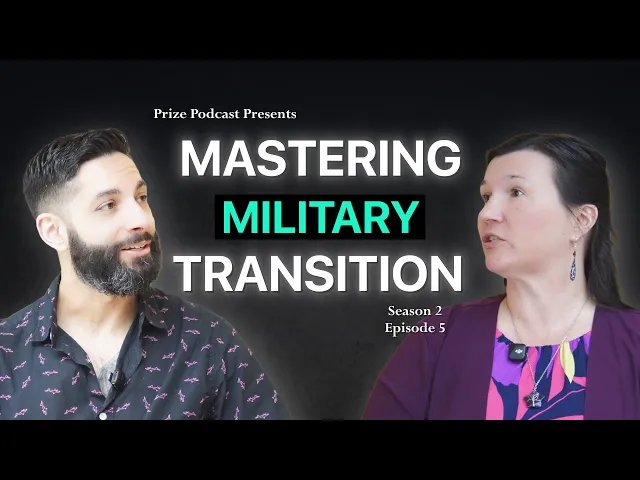
This episode is age-restricted on YouTube for language and content, so it plays there rather than here. Signing in to YouTube is required.
Jenny Pacanowski joined the Army in 2003 as a medic and, eight months later, was running convoy ambulances in Iraq. She talks with PJ about a homecoming no one had prepared her for, the years it took to find people who believed her, and how writing and storytelling became the work of Women Veterans Empowered & Thriving.
This episode is age-restricted on YouTube for language and content, so it plays there rather than here. Signing in to YouTube is required.
In Jenny’s words
“So the whole process of my healing was really like, how do I save myself?”
“I'm here today because of the people that supported me that saw what I needed, not necessarily the VA or even any organization, but like my family.”
“And I looked at her and I was like, that sounds like a facilitator problem, not a veteran problem.”
“So if you are an artist out there, a veteran or not, you are welcome to come and tell your story with us.”
Transcript
Lightly edited transcript from the episode audio
Speaker labels and mis-heard names are corrected by hand; the words are as spoken, filler and all.
Preview clips
Jenny: I thought I was ready for Iraq.
PJ: Yeah.
Jenny: I believed. Oh, I'm gonna cry. I believed, man. I was like, we're gonna win hearts and minds. Like, I'm gonna go save people. Like, this is all my dreams coming true. And not the case when I got there. I didn't know how to live.
PJ: Right.
Jenny: I was in that mindset of like, the next moment I'm gonna die. The next, it never went away. I was in my bedroom for like three months. My mother was terrified. Cause I'm this person.
PJ: Yeah.
Jenny: But I did not come home this person. Like I came home, like I could not function. I did not know where I was or what I was doing. I would go to the VA and there were like a woman combat veteran. Like you were like behind a desk, right?
PJ: Oof.
Jenny: Yeah. It was bad. Practitioners, doctors, like no, it was like nobody believed me. So then I was even more invisible. It's like, you don't even believe my life experience and you're the doctors that are trying to help me. So I became volatile quick.
PJ: I've heard from numerous veterans where they will shut down civilians who just want to help because they don't think they can relate. And I think this is a very interesting thing because the moment you say you can't understand, it's not even that the person doesn't understand. It's that you're not even letting them understand.
Jenny: Yes. When I'm driving specifically, I'll be like, I love that. It's like the reflex of those neural pathways they created. Like, is that a bomb? It's the little voice way back here after all these years. Is that a bomb? Am I going to die today? We went to Al-Asad and we started running convoys with the Marine Corps.
PJ: Yeah.
Jenny: So then the children, the people of Iraq became... They became like a problem. That group became toxic. So they closed it.
PJ: Whoa.
Jenny: And I looked at this woman and this is like not the volatile days. I was like pretty well on my way to healing. And I looked at her and I was like, that sounds like a facilitator problem, not a veteran problem. Those were the women that I told my stories to first. And you know what they did after I showed them what a monster I was, that I wanted children, Iraqi children to die in that place to be a parking lot? You know what they did?
They held me and they told me they loved me anyway, because that's how warriors are welcomed home.
PJ: How do we have the odysseys about to come out, right? How do we have these fucking stories?
Jenny: Because the veterans told them when they got home.
PJ: Absolutely. Hello, friends. Welcome to our next episode of the Mastering the Military Transition Series of the Prize podcast. Today we have with us Jenny Pacanowski. Jenny is a army veteran, did a combat tour, was a medic. And has gotten out, rollercoaster ride, but we'll talk through that. That's part of the journey. And now runs a nonprofit that we'll talk about as well. And I guess before we get into it, you know, you have an incredible background actually. And I resonate a lot with it, which is really cool.
I think that, so I'm going to enjoy this conversation. I hope you do as well. And let's jump in.
Conversation
PJ: So you got into the military army. And this was not something that, let's say, your parents wanted to see happen. Is that correct? Can you walk us a little bit through that?
Jenny: Yeah. I just want to say I'm really happy to be here with you.
PJ: Yeah, likewise. I like having these conversations. It's really important.
Jenny: Yes. Thank you.
PJ: I agree.
Jenny: Thank you for having me.
PJ: Yeah, definitely.
Jenny: So I wanted to join the Marine Corps when I was 17. And I brought the recruiter over to my house. And my dad is a former Marine. And he said, no, be smarter than me. Go to college. But it didn't really feel like that was what I was being trained to do. And I'll often say I was raised as a kid. I was trained.
PJ: Yes.
Jenny: So black belt, kickboxing, boxing. I didn't have a lot of direction. I didn't have a lot of focus in school. I like science, but not enough to really, really get into it.
PJ: Sure. Pursue it, yeah.
Jenny: And college science was way different than high school science.
PJ: Nope. I get that.
Jenny: So fast forward a couple of years. And I had $40,000 in debt with the loans. My mother had co-signed them. I was in a minimum wage job. And then, like, the universe stepped in. It was like, we're going to total your car. I got in a car accident. I got T-boned. And then that rental house that I was in burnt down.
PJ: Wow. Oh, wow.
Jenny: Yeah, in three weeks, both those things happened. And I was like, maybe the military would be a good look to have. So no Marine Corps. Again, Dad was really against that. And they didn't have medical. I was really starting to focus on the medical side of things. So I joined the Army, delayed entry program, got my medic MOS. At the time, it was called healthcare specialist, called a medic. And the recruiter was like, don't worry. Women don't go to war. I feel very naive when I say that statement.
But I got everything else in my contract. I got the student loan repayment, which later on was revoked. But I had it all in the contract when I originally joined in 2003.
PJ: Well, I don't think that's an uncommon story. I think that there's a lot of us that go into the recruiter or whatever else and we're sold something that isn't necessarily what happens.
Jenny: Yeah.
PJ: And I understand. Also, it's kind of a shame because I think that there are people that want to go in and do what we're being sold. And there's other people that don't. And I think a little bit of transparency could maybe help ease the backside of things. So you went in, Army, and you got into the mix fairly quickly, yeah?
Jenny: Oh, yeah. I finished my 91 whiskey training at Fort Sam, Houston. And they were like, you know, you do your dream sheet.
PJ: Yeah.
Jenny: Like Hawaii, Germany. I don't know, somewhere else really far away and beautiful. And I got Germany. And I thought all my dreams were coming true. I was going to travel through Europe and do all that and be in the military at the same time. I wanted to join the Army boxing team. I was like, this is perfect. Like all my dreams are coming true. Even though there was a sense, like I was beginning to see the underbelly of the military, of like how the leadership wasn't exactly aligned with the values that they were teaching us.
PJ: Right.
Jenny: Oh, yeah. And things like that. So that was starting to become pretty glaring at that point. But I was like, no, it's going to be okay.
PJ: You saw it early then.
Jenny: I saw it really early.
PJ: Yeah.
Jenny: Yeah, yeah. It was a moment actually in the AIT. And one of the drill sergeants had said to me, you know, if there was, they call this soldier medics. If there wasn't soldier medics over there and you were just three minutes late, I would have just let you go to bed. And of course, I opened my mouth. I did have a little liquid courage in me at the time. And I said, oh, so you decide what kind of leader you are by who's watching.
PJ: Oof.
Jenny: Yeah.
PJ: I bet that ended well.
Jenny: Oh, it was great. It was fantastic. Actually, when I went to my, like, Article 15 hearing thing, because he really took it all the way.
PJ: Oh, wow.
Jenny: He pushed it all the way to battalion.
PJ: Interesting.
Jenny: Isn't that fun?
PJ: Yeah. Let's make an example. Right off the bat.
Jenny: For that mouthy medic.
PJ: Yeah.
Jenny: But it was a cool moment for me, actually, that I remember. I don't tell this story often.
PJ: Oh, let's hear it then.
Jenny: So the command sergeant major of that entire battalion, like, heard what I said, heard what I did. And he was, like, an old, crusty, like, Vietnam veteran combat. You know, you could just, he was just, he wore it, right? He looked like leather. He was one of those guys. He was always chewing on the cigar.
PJ: Yeah.
Jenny: Yeah. I'm like, oh, my God. And I tried to advocate for myself. And, wow, he tore me apart.
PJ: Oh, really?
Jenny: Yeah. But then, interesting, the things that happened behind closed doors, everyone else walked out of the room and he was ripping my PV2s off because I was in AIT.
PJ: Yeah.
Jenny: And he looked at me and he's like, Pacanowski, you have some balls. And I was like, he's like, if you put that energy in the right direction, he's like, you're going to be a great soldier.
PJ: Yeah.
Jenny: And I was like, wow. He just told me I was the worst thing on earth in front of everyone else. But behind closed doors, you saw it. You saw that courage I've always had and still do have.
PJ: That's interesting, actually. And it actually, it's really funny and ironic in a lot of ways because what you initially said even applied to him.
Jenny: Yeah. Yeah.
PJ: However, he gave you something to look forward to, which was actually strong leadership. That's fascinating. Okay. So, you made it through the R-15. That's totally interesting.
Jenny: I did.
PJ: You made it through the R-15 and I get it. I'm sure that was painful. And then what? Where did you head after that?
Jenny: Germany.
PJ: Germany.
Jenny: Germany. And then I was there for a month and then I was in Iraq.
PJ: Got it.
Jenny: Yeah. Right in 2000. I joined April 2003 and I was in Iraq in January of 2004.
PJ: Interesting. So, were you ready for that?
Jenny: That was a great question. He's going to edit that out because I'm like. I thought I was ready for Iraq.
PJ: Yeah.
Jenny: I believed. Oh, I'm going to cry. I believed, man. I was like, we're going to win hearts and minds.
PJ: Was that at that time?
Jenny: Yeah. I'm like, we're going to win hearts and minds. I'm a medic. Like, I'm going to go save people. Like, this is all my dreams coming true. And that was not the case when I got there.
PJ: Yeah.
Jenny: I drank the Kool-Aid. I loved it. I loved America.
PJ: Yeah, sure.
Jenny: I was like a blue collar raised girl. You know, my dad worked at the Army Depot. Like, we went to Armed Forces Day. I looked up to these men around me because there was no women to be my example. But I was like, I'm, I'm, I think, aside from my great or my grandfather, who was in World War II, I'm the only combat veteran in my family.
PJ: Wow.
Jenny: Even though all the men have served.
PJ: Yeah.
Jenny: Just about all the men.
PJ: Mm-hmm.
Jenny: So it's interesting. It's an interesting dynamic. And then I'm the one that first spoke out, right? I'm the one that stood on stage. And I was like, I'm going to tell my story. And people are going to hear me because it's important.
PJ: It is important. Yeah. So, okay. So, no, actually, I like the laugh. We're going to keep that. Um, you, you said you laughed at not being ready and that, like, this was kind of your, your dreams coming true as you headed into Iraq. So what was that like?
Jenny: It was terrifying and exciting. And I remember the first convoy from Kuwait to, into Iraq. I remember looking at the, it was like a bullet ridden sign. And it didn't say welcome to Iraq. It said something Iraq and then Arabic.
PJ: Yeah.
Jenny: I don't know. I wish I had taken a picture of that sign. Um, and I was like so excited and so terrified. And the first day I was like, I'm driving the whole time. I'm with my sergeant. She's my TC. And then by the, by the next morning I was just trashed. I was like, oh my God. You know, the, the military, maybe you don't know. The Humvees are, the military ambulances are Humvees.
PJ: Yeah.
Jenny: They're like cracker boxes is what, there's many different like names for them. So it's green, which I didn't, I wasn't alarmed at first until I looked back and I was like, why do I have a green ambulance in the desert?
PJ: All the pieces started to fall into place.
Jenny: Yes, of course. And then the big, uh, red and white, uh, cross, which at about six months in we had to close because the insurgents started to target them out.
PJ: Oh, absolutely.
Jenny: Yeah. Their morale. We were life saving. We were what they needed to get rid of first. Uh, so we closed those eventually. And then eventually they put some kind of like armored doors about seven or eight months in, but going in, we had nothing. They were green. They were just like paper. And the, and then we were like, we're going to put Kevlar blankets that we're going to sit on. So that did wonders for my body. And I still feel the pain of the convoy that radiates through my hips, through my back, through my shoulders, all the things.
PJ: Yeah.
Jenny: I've done every healing modality you can think of to try to like set my body straight in some way and not to be, I'm always in pain, but, um, like different levels.
PJ: Sure.
Jenny: So, so I, I'm at a low level today, which is, I'm grateful for.
PJ: Good.
Jenny: Which makes me more pleasant and good.
PJ: Yeah. I mean, what was that like first going in then? You said terrifying and exciting. And I understand both those emotions. Like, and why you would feel that. What about like, let's fast forward a month into it. Like what, where were you at that point?
Jenny: Oh, the month, that first month. The first month I really thought we were doing everything that we came to do. One of my first missions was to go into a fob on the border of Syria and Iraq. And, uh, we went into the village and we, um, we did physicals on the kids. And like, it was so sweet because like I'm holding the stethoscopes and they're like, their little hands wrap around. And like, it was just like everything I thought it was going to be.
PJ: Yeah.
Jenny: Yeah. And, um, and I really like love the kids. And I know I was there for the soldiers as too, but I really, really, let's drive this idea home. I really believe we were there to like help the Iraqi people.
PJ: Yeah.
Jenny: And so did they. Years later, I met an Iraqi man who, um, has a dual citizenship. And he, um, I was like, what did the Iraqis think? He's like, oh, we believe too. We thought we were going to be the 51st state of the United States.
PJ: Wow.
Jenny: And I was like, I was like, oh, like it was such a beautiful moment for him and I, because I believe too. And, um, so that first month was, uh, was kind of cool. And then they celebrated us. They boiled an entire goat and put it on a platter of rice.
PJ: Oh, wow.
Jenny: Yeah. So we're like taking care of all the kids. And then we walk into this kitchen community area. It's a fucking whole goat on the table with rice. So we took our Cipro and we, you know, we don't want to be rude.
PJ: Yes, of course.
Jenny: And we ate this goat. And of course being gross, you know, army people, we're gross army people. One of my sergeants was like, you won't eat the tongue. And I was like, yeah, I will. And he was like, want to have an eyeball? I was like, sure, why not?
PJ: Wow.
Jenny: Yeah.
PJ: When in Iraq?
Jenny: Yeah. Backstory to that, raised by a Marine. He was feeding me sardines when I was one.
PJ: I'm sure.
Jenny: And we were doing, we were doing, we just loved the experience of food.
PJ: Yeah.
Jenny: Like who cares? Because you obviously don't know who you're talking to. And then after that, we went to Al Asad and we started running convoys with the Marine Corps.
PJ: Yeah.
Jenny: So then the children, the people of Iraq became, they became like a problem and danger. And there's a fucking word I cannot find right now.
PJ: The enemy.
Jenny: They became the enemy, especially the kids. Because they were always.
PJ: Because they were strapping them with IEDs and stuff or.
Jenny: Well, the detonators and then, you know, the guys would be off like the RPGs and hitting the ambushes. And they would be putting the kids in the road or like running across or near the road to get the.
PJ: To stop you.
Jenny: The convoys to stop. And, you know, weaponizing the children.
PJ: Wow.
Jenny: Yeah.
PJ: Oof.
Jenny: Yeah. My TED Talk asks us about that.
PJ: Right.
Jenny: The enemy. About like that transition from like, wow. Beautiful. Waving my flag to holy fuck. I want everyone to die. I want that. I want to be the fuck out of here. Nowhere is safe.
PJ: Mm-hmm.
Jenny: I'm not safe to be around. Me being weaponized as well.
PJ: Yeah. I can only imagine. I can only imagine that, especially going from the experience you had earlier on where you're connecting with them. It's almost like you can't trust anyone. So, all right. Let's, you know, let's fast forward to like getting out. I know that you had some experiences here where you get back from your deployment. You are expecting to have your college loan repaid. Walk me through that.
Jenny: So, when I was still in Iraq, I got a letter in the mail. Not, I went, I was in Iraq. I went home in R&R and my mom had this letter and it said, we're not going to pay your student loans off. Like nobody told me from my unit, like anything. So, I get this letter and I have to make the decision on whether I'm going to go back or not. And this is like the interesting thing about the military. It's powerful and it's also manipulative.
I'm not about to not go back and like fight my battle, you know, my legal battle stateside because I can't live with the fact that my friends are going to run my convoys.
PJ: Yeah.
Jenny: And I also didn't think I was going to live. I was thinking more of if the next IED hits me, not when.
— Let lurk.
PJ: Wait, the other way around.
Jenny: When, not if.
PJ: Yeah, and when, not if.
Jenny: So, I definitely had that, that I was on borrowed time.
PJ: It's like survivor's guilt?
Jenny: I think it, something. It's just, it was, I was just trying to think of the probability, right? Like I ran like whatever, five convoys a week, like IEDs in the front and the back so far. I've gotten in a truck accident. I'm like, it's only a matter of time until they get me. Like, and then they were targeting, targeting the medics. So, that just added like fuel to my fire of thinking like, I'm not going to make it through this. So, I'll just go back, do what I need to do.
Like the loan thing's not going to be a problem because I'm not going to be alive.
PJ: Oh, wow.
Jenny: Yeah. And so, like we had a barbecue and stuff and I was like saying goodbye to people and they didn't know I was saying goodbye to them. I was like saying goodbye to them in my mind. But I did live. And I did go back.
PJ: So, I get out.
Jenny: Yes.
PJ: How did that feel?
Jenny: How did I, that I lived?
PJ: Yeah. I mean like you're preparing for something mentally that I don't think is uncommon, by the way, in the military. Like you're preparing for something mentally that in your case here it sounds like is almost like a sure thing. And not only did that not happen, but like you're then dealt a set of cards that kind of almost forces it not to happen. Which I'm glad it didn't happen. But like it's a, there's a dissonance that's now happening in your brain. Can you walk me through that?
Like what's going on with you at that point? Like how are you reconciling that?
Jenny: Yeah. I didn't reconcile it until almost 20 years later. I didn't know how to live.
PJ: Right.
Jenny: I was in that mindset of like the next moment I'm going to die. The next, it never went away. And still in small moments when I'm driving specifically, I'll be like, I have that. It's like the reflex of those neural pathways they created. Like, is that a bomb? It's a little voice way back here after all these years. Is that a bomb? Am I, am I going to die today?
— Today.
PJ: Wow.
Jenny: Yeah.
PJ: Interesting.
Jenny: So the whole process of my healing was really like, how do I save myself? And how do I want to live? And then how do I, how do I be happy?
PJ: Yeah.
Jenny: How do I cultivate happiness?
PJ: This is a step at a time.
Jenny: Yeah.
PJ: But we're definitely going to get used to that. Um, no, I do. I think that that's a really important thing for us.
Jenny: I think I answered the original question though, didn't I?
PJ: You did. You actually answered the original question. And I, I wanted to drill in to that a bit because I, I hope you all see this. You're not alone, right? Like there's, there's people that feel this. So, so don't think that when you have these thoughts and these feelings, like that you're alone. There's, there's people that also have these things going on.
Jenny: Yeah.
PJ: So, all right. I'm not just going to gloss over it, but we'll get there.
Jenny: Yeah.
PJ: So, um, you get back, you're, you're now have this legal issue going on.
Jenny: Yeah.
PJ: How did that play out?
Jenny: Um, my command, uh, got me like a civilian lawyer that worked for the military and he didn't know anything or he was advised not to tell me anything. So he just told me to get out. Uh, cause I was pretty done at that point. I was like, I feel betrayed. The disillusionment, um, Iraq was not what I thought it was going to be. Um, there was no blending hearts and minds. There was no rebuilding. So, um, and I also felt very much like I was a number after realizing of the green ambulances and the lack of armor and the lack of preparation.
What, like, what were we doing there? What was I doing there? Um, the lack of infrastructure that was in place too. Um, so I wanted out. I was done with the military. Um, and then he was like, fine, get out, apply for your benefits. Well, what the hell does that mean? I didn't know. I was like, oh yeah, I'll apply for my GI bill after. Cause I gave up my GI bill for the student loan repayment. So I get out and I have nothing. And, um, and I have a lot of problems with my command.
And then my military sexual trauma happened right around that time. Um, when my ex fiance tried to rape me. Um, so it was just like a lot of shit in a very short amount of time. And then I was home and I'm like, what the fuck?
— That moment.
Jenny: I think I was in my bedroom for like three months. My mother was terrified because I'm this person, you know, I, but I did not come home this person. Like I came home, like I, I could not function. I did not know where I was or what I was doing. I stayed in the reserves, um, because it was terrifying getting out, just being completely separated after all of that training, all of that, you know, we need each other, you know, watch out for the people next to you.
Like it was really hard to split from the camaraderie. Um, so I actually joined a unit in DC in Walter Reed. My friend also was in Maryland at the time. So there was that like little bit of connection of like someone from that I served with in Iraq and also like we're home. So the weekends with her were really helpful. I, a lot of times I didn't go to drill. I just hung out with her. Um, but they let me out as well because once my PTSD was diagnosed, they were like, we don't want to deal with you.
PJ: Yeah.
Jenny: Get out.
PJ: Okay. So I think that I read somewhere, you can correct me on this one. Um, at least based on, on the research that I was doing that there was a, it was a feeling of being invisible. Um, what can you, can you help me understand that? Like where, where was that coming from?
Jenny: Yeah.
PJ: When, when did that really take hold?
Jenny: It's a cold right away because I felt very disconnected from everyone else because even with my father, his and I experiences were different. I'm a woman. And as much as I tried to join the boys club, as much as I, I, I did everything I could to adhere to that culture. Um, I have another really cool poem about that called combat Dick.
PJ: Oh man.
Jenny: Yeah.
PJ: Yeah.
Jenny: Literally the main theme is my vagina metamorphosized in a combat Dick so that I knew how to excel and survive.
PJ: Wow.
Jenny: I'm like, bam.
PJ: Mm-hmm.
Jenny: And so the culture I went, um, so, so here I am home and I'm like, I have just no idea what's going on. I try to work, I try, you know, and then the drinking is a problem cause I can't sleep. That's where the drinking really ramped up and I'm like, I can't sleep. I can't sleep.
PJ: Oh, interesting. So you were drinking to sleep?
Jenny: Yeah. Well, pass it out.
PJ: Yeah.
Jenny: Yeah.
PJ: Was that an excuse or was that?
Jenny: No, I really couldn't sleep.
PJ: You really couldn't sleep.
Jenny: It was really weird.
PJ: Like nightmares or?
Jenny: Yeah. Yeah. The convoys were playing in my mind like a movie all the time, every day. And then I was triggered every moment of going to drive somewhere. And I didn't make any of these connections. The word PTSD when I got home in 2005, like was not even on the radar or like they weren't going to talk about it or recognize it. And then I would go to the VA and there were like a woman combat veteran, like you were like behind a desk, right?
PJ: Oof.
Jenny: Yeah.
PJ: Yeah.
Jenny: It was bad. Practitioners, doctors, like no, it was like nobody believed me. So then I was even more invisible. It's like, you don't even believe my life experience and you're the doctors that are trying to help me. So I became volatile quick. I was like, well, you don't believe me? This is how I'm going to act.
PJ: Yeah.
Jenny: And it didn't help because people don't want to help the veteran that's screaming at them and threatening to throw them out the window.
PJ: Right.
Jenny: That was a very specific psychiatrist.
PJ: Oh, no.
Jenny: My dad started going to my VA appointments with me because he was the one that could handle the rage, the volatileness, the we have to go now before security comes. Stop yelling at people.
PJ: Well, I'm really happy you had them on your side like that. And I think I remember you saying that your mom was really on your side as well, which, you know, I'm happy that you had that sort of a backstop.
Jenny: Yeah. I'm here today because of the people that supported me that saw what I needed, not necessarily the VA or even any organization, but like my family. They didn't understand what to do, but they were there. And they, God love them. They dealt with my abuse. And I don't blame families that cut off their veterans either because sometimes that's the moment where you need is like, hey, I need to do different things with my behavior. And me and my mother got to that point eventually. She did it very gently with like a tank full of gas and some groceries and like, you may go away now and try to figure this out yourself.
I moved to Ithaca. I moved away from like the drinking and the drugs and everything that I got involved with after that. And she took the helm on the legal battle with representatives and senators. And there's some congressional hearing that happened that I was not a part of that she got pushed through and they paid back three quarters of my loans.
PJ: Wow.
Jenny: Yeah.
PJ: Yeah. I mean, while I'm sure there's plenty of people that didn't go through the same exact thing, I do believe that there's probably people right now watching that understand on a different level, maybe.
Jenny: Yeah.
PJ: And I think that it's really important for everyone here to remember that there are people that you can lean on. And there will likely become a point, and this hopefully becomes a bit of a wake up, where it's like maybe they need to say bye.
Jenny: Yeah.
PJ: And the challenge to navigate that, it's not a small challenge. However, if internalized properly, it can really help you start to now make a shift. Because it's likely a two-way road, right? It's likely not just you being toxic in that scenario.
Jenny: Yeah.
PJ: The energy flows, right?
Jenny: Right.
PJ: And now it's being reflected. And sometimes getting that, I'm sorry if I'm speaking a little hand-wavy here, but like sometimes getting a change of scenery can really make a huge difference. So you've got to change the scenery.
Jenny: Yeah. I joined a veteran artist community.
PJ: Right. So how was that?
Jenny: Imagine, like, it's 2011, and we're not exactly skilled in our own coping mechanisms yet, and we're trying to run a nonprofit together. We're doing combat paper. We're cutting up our uniforms, and we're doing workshops, and we're creating handmade paper. I'm doing the writing workshop facilitation. And I'm essentially starting to develop this, my own thing of like, okay, what do I need? And then I was like, oh, that's the answer. So I'm filling my container before serving and then giving to the people around me. So that started to become clearer and clearer, like that selfless service and all of that jumping on grenades, physical, you know, the emotional labor.
I had to take care of myself first.
PJ: I like that.
Jenny: It wasn't going to work.
PJ: Yeah.
Jenny: But there were still so many veterans around me that they're like, oh, I want to serve, and I want to help other veterans. And I'd be like, I'd say the thing they didn't want to hear. Like, how are you helping yourself first?
PJ: Well, you can't pour from an empty cup.
Jenny: Yeah. I mean, people do, and it leads to depression, depletion, resentment, anxiety, all the things, suicide, homelessness, addiction, incarceration.
PJ: That's the route. Well, likely also, you're not making the impact that you think you are.
Jenny: Yeah.
PJ: And I'm not trying to like disparage anyone who's doing this. You just have to realize that you can't always give what you don't have.
Jenny: Yeah.
PJ: Like, that doesn't make sense, right? So being able to give to yourself first actually allows you to give at a much higher level.
Jenny: Yeah.
PJ: Right?
Jenny: Yeah. And I wanted to be a model. Like, lead for all these, you know, if I want to take the ideals of the military that didn't uphold them, how do I uphold these things? Lead from the front. Lead from example. Be a model. You know, have that integrity to stand up and be like, you know what? I'm not doing a great job taking care of myself. And saying that in a room full of veterans at workshop.
PJ: So how did you learn that?
Jenny: Did I learn that?
PJ: Yeah. I like that. What was the point that made that shift?
Jenny: Oh, that's good.
PJ: Yeah.
Jenny: 2013, New York City. I started doing gigs in New York City. And I met this guy named Stefan Wolfer and he became my mentor. And he's the one who really paved the foundation and the road for me. Take care of yourself first. He wasn't super great at it either. So it was not nice, but it was very human to see him fail and try again and fail and try again. And no one died. That was like something I was very attached to and still am. Like, is anyone going to die?
Is anyone going to die? Is someone going to die right now? And then people started dying, you know. My friends started committing suicide. None of my friends, my fellow service members. So like, was that even a realistic question? Like, people are going to die.
PJ: Well, but, and help me here. Like, I don't know that, like, it sounds like you're kind of conflating two things, right?
Jenny: Yeah.
PJ: Like, because the, if I fail, will people die?
Jenny: Yeah, there it is.
PJ: Right?
Jenny: Yeah.
PJ: Whereas if, if I don't even try, that's when people are actually dying.
Jenny: Yeah.
PJ: Right? Because they're not even trying. It's, it's the almost, it's almost the opposite. And tell me if I'm wrong here.
Jenny: No, no. But it's almost the opposite here where it's like, I actually do try it. And, and if I fail, cool, no one dies. Like, I, I failed. How do I reset?
PJ: Yeah.
Jenny: How do I become resourceful and try again? And if I fail again, okay, how do I try again? As opposed to, I'm not even going to try. And now it's, I have nothing else.
PJ: Yeah. Yeah.
Jenny: It's, um, for me, and this happened pretty recently, it was that, um, I created this thing of how to take care of yourself. We do these skills together. We tell these stories. There's the part-time employment program. If you tell your stories in public, I've created this, this thing finally, right? 2016 happens and, and I, I can just gift it to people and lay it at their feet and they can decide whether they want to apply it or not. I was getting really too attached to outcomes.
PJ: Oh yes.
Jenny: And attaching my healing to other people's healing. Like this is not, I can't, I can't make you heal. I can't save you. That became like a big theme in my life where I got really, really, really wrapped up in it for like long periods of time being like, what other resources do you need? What do you need? And really what it, what they needed was to apply it themselves.
PJ: Absolutely. You have to be a part of your like recovery.
Jenny: It was, it was a hard lesson. That's a hard lesson for me.
PJ: Well, you know, I actually, I was talking to someone earlier about this too. Um, I, I very much so adhere to the whole idea of like low expectations, high standards, high goals, because the standards and goals are what you can control. And, um, and those are the things that actually influence the outcome. Right. And if you have low, if you have low expectations, if so, almost all suffering almost comes from missed expectations. You expected it to be one way and it didn't. Right. Whereas if you now have low expectations at, at, at, at, at, at, at, at, at, at, at, at, at the worst, it didn't meet the expectation at the best.
It's a miracle.
Jenny: Yes. Yes. Yes.
PJ: Be happy. Um, but I, but I think like, right. But the standards and values piece I think is so important because those are what's directly in our control. And I love that you actually touched on this at the beginning because you called out the DI for not being congruent with the standards and values. Whereas my own personal journey, I have found that it's actually the standards and values when you become congruent with that, it actually helps a lot of the anxiety and a lot of the other things go away because now you're integrous.
Jenny: Yeah.
PJ: Right. Now you're being who you think you are and who you set out to be and you're in alignment and it took a long way to get there. But yeah.
Jenny: Anyhow. And like the workshop, the things that we teach at, at women veterans empowered and thriving, like they are things that I use for myself. That's why we call ourselves facilitators. I'm not your guru. I'm not your teacher. I'm not like, I am in this with you. We are doing it together. And I would never ask you to do something that I wouldn't do.
PJ: Absolutely.
Jenny: And that was a huge thing for me in the military watching like my first sergeant sit in the air conditioning or fly from base to base in a helicopter instead of a convoy. Like that shit was like, oh, it's still this day. Like he sent me a friend request and I was like, no, I couldn't help myself. I was like, no, how dare you have self-preservation? Well, it wasn't an option for me.
PJ: Sure.
Jenny: I didn't have a choice.
PJ: Yeah.
Jenny: He did.
PJ: Yeah.
Jenny: And really, can I blame him?
PJ: Yes.
Jenny: But no.
PJ: But does that help you?
Jenny: No.
PJ: Yeah. So let's make this actionable.
Jenny: Okay, let's do it.
PJ: I love you. You have transformed like a butterfly, right? You've gone through your metamorphosis here. But help me make it actionable. Someone is in their room, locked in. They're dealing with anger. They're dealing with PTSD. They're dealing with drinking, drugs. They're feeling invisible. How do you move to that next step? And what is the next step?
Jenny: Well, I'll speak in an eye.
PJ: Yeah. Yeah.
Jenny: I just started trying things. I had to get out of that room. That first veteran artist retreat in 2007, my mother, I wasn't going to go because I had to drive. And my mother showed up at my house and she packed my shit. So even just I was telling people around me things that I wanted to do and having someone go with you was so helpful to me. Even now when I do outreach events, like I did an outreach event. Well, I did an activity last night, like a veteran activity.
And I usually go to be a participant because I have my own thing, you know, but I was like, I'm going to do this. So like I brought my new boyfriend and I was like, you know, come be like the, you know, just like that support. So if you need it's called body doubling, too, I think they do ADHD people as well.
PJ: Yeah.
Jenny: So like ask someone to go with you. Just get the fuck out of the room. I mean, I don't even know what to say aside from that. Take that one fucking step. And for us, you don't even have to get out of your room. I tell everyone just do the workshop in your pajamas. We will meet you where you're at. It's interactive, but it's like, yeah, Zoom. It's interactive, but it's permission to say no and an invitation to say yes. You know how we used to ask permission to speak?
I was like, this is permission to say no. Like, fuck off, Jenny. But go on the Zoom. Just sit there with your camera off, muted, whatever. A lot of people do that. They'll observe the first workshop. Reach out to me. I'll meet you for lunch within a three-hour radius. I know. We can do some LA BL. Yeah, we'll be like, hey, come to come. I mean, maybe. It's, you have to ask for help. You have to ask for help. It's the only way. And it sucks.
And you feel weak and, like, lonely. Or I felt weak and stupid and all the terrible things I could say about myself. But I had to ask for help to get the fuck out of that room. I had to. There was no other fucking option.
PJ: Absolutely. So you were willing to fail.
Jenny: Yeah. Yeah. That mentor, that was his saying that I, like, lived by for years. Dare to fail. And I was like, no, someone's going to die. He's like, no, they're not. And I'm like, maybe they are. Let's not talk with just things. Like, dare to fail.
PJ: I like that. Yeah.
Jenny: Dare to fail.
PJ: Sweet.
Jenny: Loud and wrong.
PJ: Loud and wrong. That's another one.
Jenny: Because he's an actor. Loud and wrong. If you're going to, like, we're reading, we're reading Shakespeare. Because he does healing trauma through Shakespeare. So we're reading Shakespeare. And we're like, thou is, didst. And then everyone starts to mumble.
PJ: Right.
Jenny: Yes. And he's like, loud and wrong. And we're like, okay, thou didst. What the fuck am I saying? Okay. And it has the iambic pentameter. So now it's our heartbeat. So the louder you are, the more it becomes. And then he doesn't want, he's not a fucking scholar. He's like, what does that line mean to you? And then we're interpreting it from our own personal viewpoint. And then we're connecting our stories.
PJ: Oh, that's cool.
Jenny: With Shakespeare.
PJ: Yeah. Interesting.
Jenny: And it makes you feel rad.
PJ: Yeah.
Jenny: Made me feel rad.
PJ: Well, hey, that's really cool. I mean, and this kind of goes to show, too. There's so many options out there.
Jenny: Yeah, everything. So many options.
PJ: And a lot of times it is just about like exploring. Go try one. Is it right? No? No. Okay, cool. Go to another one. You know, there's so many. Maybe try twice.
Jenny: There's so many, though. There's so many.
PJ: How did you get plugged in with them? With DeCruz?
Jenny: Yeah.
PJ: Jeez. Wow.
Jenny: Fuck if I know. It's that thing, I think. The veteran community, it is that thing. It's that word-of-mouth thing. The veteran community is so small, even though it's worldwide.
PJ: Yeah.
Jenny: And you just like ask a friend, like, hey, have you tried this?
PJ: Yeah, yeah.
Jenny: Have you done this? And actually, the first six-week class he did, I heard about it from a – it had to be from another – it had to be from another veteran. And I was the only person that showed up to his workshop because he was new to New York and no one trusted him.
PJ: Yeah, of course.
Jenny: So I found myself being – it's a terrible thing, so I'm going to say it anyway.
PJ: Do it.
Jenny: I was a guinea pig.
PJ: Yeah, sure.
Jenny: I was like, any new program came out, and I was like, I can do this. Once I took that first step out, I was fucking in it.
PJ: Oh, I love that.
Jenny: Yeah, yeah. And I was like, okay, you guys don't want to fucking be the guinea pig and shit. Like, fuck. I'll go. I'll check it out. I'll come back and report. Fuck it.
PJ: Yeah.
Jenny: You know?
PJ: No, I think that's so important. Again, being prepared to fail. You know, do you know Sarah Blakely?
Jenny: No.
PJ: No? Spanx? You know what I'm talking about?
Jenny: No.
PJ: No? Okay, so talking about women's underwear. Sorry. Sarah Blakely was the one who started Spanx.
Jenny: Okay.
PJ: I think it's not actually –
Jenny: Is it the period underwear?
PJ: No, I don't think so. It's like shapewear.
Jenny: Oh, okay.
PJ: You know what I mean? She was kind of the first one that started it.
Jenny: Cool.
PJ: But she grew the business to be like $22 billion or something like that.
Jenny: Oh, yeah.
PJ: And she sold it. You know, so super rich person. But anyway, the reason I say that is because her dad would like – whenever she got home growing up, he would ask her what she failed at that day.
Jenny: Wow.
PJ: Right? And he built that into her. And she would be like – he would get mad at me if I'd be like nothing. And it was like because you didn't actually try something new. Man, I think that we in the military are so kind of conditioned to not fail.
Jenny: Yeah.
PJ: Right? Don't put yourself out there. Because there's a human cost sometimes to that idea of failure.
Jenny: Well, they train the human cost.
PJ: True.
Jenny: 100%. Everything becomes life or death. The snake shoelace. Somebody died. You know, they connected it so deeply and with those neural babbles. Don't have to mention socks.
PJ: Yeah.
Jenny: Like, oh, that was my favorite thing to do. Especially like halfway through Iraq, I'd have a black and a green sock on. I was just like – Just to post people.
PJ: Yeah.
Jenny: Well, no one ever saw my socks at that point because we're out of training and everything. But I just – it was like my own silent protest against it.
PJ: Hey, I can appreciate that. I'll show you pictures of me in high school. You'd laugh.
Jenny: Oh.
PJ: So let's now march forward the second step.
Jenny: Okay.
PJ: You got out of the room because you dared to try.
Jenny: Yeah.
PJ: What was next? And how did you overcome that next hump?
Jenny: After going through all those programs, I was taking what I need, you know, and like leaving the rest. I didn't really know I was doing this. I was gathering intel. And then I was like – so I moved to Pennsylvania to be with a guy. And I walked into the VA and I was like, hey, where's the Women Veterans Group? Because I'm like, I'm looking for women now. I'm like, oh, they're – you know, they're not competition. They're not – you know how they pit us against each other.
So I was just like, where are the women veterans? And the receptionist, whatever they call them, MSAs, whatever the fuck they call them, anyway, looks at me and says, that group became toxic.
PJ: Ooh.
Jenny: So they closed it.
PJ: Wow.
Jenny: And I looked at this woman. And this is like not the volatile days. I was like pretty well on my way to healing. And I looked at her and I was like, that sounds like a facilitator problem, not a veteran problem. And I was enraged. I was like, oh. And I had already been public speaking and doing writing workshops at that point. Like I had all this press and everything else under my belt. And I was like, I have all these fucking skills. I'm like, I'm going to start something.
I didn't know what that fucking meant. And I didn't know how fucking hard it was going to be and continues to be this day.
PJ: Absolutely.
Jenny: But I did know how to help myself. And then I put it in a model. And then I got a business partner. And she added to the model. And then we started doing research with the model so that like where is the reintegration program? Well, there isn't really one that's documented to be completely successful. So now I'm in the process of proving that our empowerment model, that telling your story is evidence-based to help you with your mental health, to make sure you don't kill yourself, suicide prevention, all of these things.
You have a community that surrounds you. It's part-time employment when you tell your story. Like all of these things. It's re-entry for incarcerated veterans. Like I really started to like hone in on that. But it started in a little farmhouse where I was doing a writing workshop. And I invited these women veterans in. And didn't those women show up? And do you know we didn't have heat in the winter? And we didn't have air conditioning in the summer. And we sweat. And we cried. And we laughed.
We sat in that room. And I realized there was something there. It was magic. And everyone needed it. Everyone.
PJ: Yeah.
Jenny: Because what we also found out with the research is it's not just veterans that have trauma and stories. It's everyone.
PJ: Yeah. How about that?
Jenny: So. Trauma is subjective.
PJ: Yeah.
Jenny: Yeah.
PJ: I love that.
Jenny: I do. No, I'm crying again. I do. I love it.
PJ: It's cry day.
Jenny: Well, it's cry day.
PJ: If I were to make this succinct, the first step was being willing to fail.
Jenny: Yeah.
PJ: And the continued action was being willing to fail.
Jenny: Yeah.
PJ: Yeah. So that first step sounds like being willing to put yourself out there and taking that first step in failing in the smallest way probably didn't fail.
Jenny: No. No. No.
PJ: And having someone with you.
Jenny: And having someone with you that was by your side.
PJ: So being willing to be okay with failure.
Jenny: Yeah.
PJ: And then having someone community in order to lean on.
Jenny: Yeah.
PJ: Yeah. And very often that was a civilian.
Jenny: And very often that was a civilian.
PJ: Yeah.
Jenny: I'm glad you said that.
PJ: Interesting.
Jenny: No, I'm glad you said that actually. I've heard from numerous veterans where they will shut down civilians who just want to help because they don't think they can relate. And I think this is a very interesting thing.
PJ: Because the moment you say you can't understand. It's not even that the person doesn't understand. It's that you're not even letting them understand.
Jenny: Yes.
PJ: And what are we trying to be?
Jenny: What are we trying to be?
PJ: As veterans, are we going back into the military and living that lifestyle? Or are we trying to learn to be successful civilians?
Jenny: Yeah. Or empowered veterans is what I call it.
PJ: Absolutely.
Jenny: So who better to guide us than the people that live in the culture that we need to learn? Like really? Like am I the smartest person in the room? I don't think so. But when I figured that out, I was like, oh, we're trying to be civilians. Can you tell me what to do? Because I have no idea what I'm doing. And that was like a huge thing. I joined a women's circle. I'm a combat veteran. And all these women are just like, oh, and they're sighing and they're breathing and they're yoga teachers and they're real estate agents.
And I was judgy as fuck, as you can see from what I just did. And those women, those were the women that I told my stories to first. And you know what they did after I showed them what a monster I was, that I wanted children, Iraqi children to die in that place to be a parking lot? You know what they did? They held me. And they told me they loved me anyway because that's how warriors are welcomed home. And then that leds the path of like, oh, the Greeks, the Romans, the Native Americans, the Vikings.
How do we have these amazing, bloody, terrible movies? 300, you know, that Viking series, the Trojan, like all those. How do we have the odysseys about to come out, right? How do we have these fucking stories? Because the veterans told them when they got home.
PJ: Absolutely.
Jenny: And I'm like, I'm like, here you go. And I'll fucking pay you to tell your story.
PJ: I love it.
Jenny: I love it. I really do.
PJ: You got the leader, Jenny. Did you see her arrived?
Jenny: Yeah, absolutely. There was the butterfly.
PJ: I think this is so important. And if I were to boil everything that's been down.
Jenny: Let's make soup.
PJ: So far.
Jenny: Yeah, I love that.
PJ: Thank you. Is, is, don't be afraid to fail.
Jenny: Right.
PJ: And go find someone who is, is going to be willing to hear you and call you on your bullshit.
Jenny: Yeah.
PJ: And stand by your side.
Jenny: Yeah. Call you on your bullshit is a big one.
PJ: And be able to hear it.
Jenny: Yeah.
PJ: That self-reflection piece is a big part of it.
Jenny: It was a huge part for me. And I did not fucking like it.
PJ: No, of course not.
Jenny: Not a single time that it happened. Even when it happens now. Swallowing a porcupine.
PJ: Yeah.
Jenny: I'm like, oh, okay. And then I'm like, okay. I'm going to apply it now.
PJ: Yeah.
Jenny: I can do this.
PJ: So how did you, how did you wind up turning Women's Empowered into what it is now?
Jenny: Ah, so yes, we're starting to develop branches to this Women Veterans Empowered and Thriving. Veterans Empowered and Thriving. We're already working on the new logo. We wanted to be inclusive.
PJ: Sure.
Jenny: I was so specific at what I was doing when we were doing it in person only. And then COVID happened. And then we went virtual and national and international, started hosting workshops in Germany.
PJ: Wow.
Jenny: Yeah. Full circle. All the things.
PJ: Yeah.
Jenny: Funny, right? Same woman that was stationed in Maryland. My only connection back since to that world when I came home. She started, we're here for Wounded Warrior Project.
PJ: Oh, wow.
Jenny: And then she called me one day and she's like, hey, I'm in Germany. Do you want to do one of your workshops on our platform? And I was like, hey, Jez. Like, yeah. I'm so glad you're fucking alive. So, yeah, it was really cool. Really full circle. Shit. I was in the middle of saying something really important.
PJ: Yeah. How you're growing Women's Power to you.
Jenny: Oh, thank you. So we opened our programming up. We have civilian support members. We have workshops with all veterans, which is really helpful for the women veterans and the male veterans with military sexual trauma, like biggest secret in the military, men are raped as well.
PJ: Oh, yeah. I've heard of a few actual pretty terrible stories. I remember at CBS we had one, too. I'm not going to go into that.
Jenny: Yeah.
PJ: Yeah.
Jenny: Yeah. And I am grateful to the men that speak out on that issue and talk about their rape because it's a really, really, really hard thing to do. And it's also knowing, I had this conversation at a speaking event just the other day. At Moravian University, I spoke to the students. Rape isn't about sex. It's about power.
PJ: Yeah.
Jenny: That's the difference that people really need to understand of why it happens to everyone. So opening the programming up, letting the veterans lean on each other. And no matter what walk of life or type of service that you had, we invite everyone. We don't check DD214s or anything. Because also, if someone really needs that room that bad and they're willing to lie about it, there's something there.
PJ: Sure.
Jenny: But we have the civilian support members. And we work with incarcerated veterans in person at the facilities, which is one of my big funding focuses right now because there's more and more prisons reaching out to us. So something's happening.
PJ: Yeah.
Jenny: They see it.
PJ: Another terrible institution to work within.
Jenny: Yes.
PJ: I understand.
Jenny: So yeah, we're expanding a lot. And it's virtual. And some people have a problem with the Zoom aspect of it. But it's really meeting people where they're at.
PJ: Absolutely.
Jenny: And then we have hybrid options in the Lehigh Valley.
PJ: Mm-hmm. Okay.
Jenny: Yeah.
PJ: How can someone get a hold of you?
Jenny: Oh, God. You're going to make me do the handles thing.
PJ: Yeah. You can do the handles thing. You can do the website. Doesn't matter. Email.
Jenny: Oh, that's easy. Our website is womenveteransempowered.org.
PJ: Okay.
Jenny: And straight up, you can Google my name and all the shit will come up.
PJ: Yes. It's a TED Talk ad, but it's worth watching.
Jenny: Yes.
PJ: I'll drop all that stuff in the show notes.
Jenny: Oh, yeah.
PJ: What's your favorite book?
Jenny: My favorite book? Oh, God. I hate that question.
PJ: Why?
Jenny: Because I don't read.
PJ: You don't read?
Jenny: I listen sometimes.
PJ: Oh, what books have you listened to? That's your favorite. What's your favorite?
Jenny: I giggle. Favorite book? I can't even think of one. How funny is that?
PJ: Books are the things you made out of paper.
Jenny: Yeah.
PJ: Or they're on audio.
Jenny: I'm like, why can I not think of a book?
PJ: Wow.
Jenny: Wow. I can't even remember a book I read recently.
PJ: No?
Jenny: No, not at all.
PJ: Okay. We'll come back to it.
Jenny: Yeah.
PJ: What's your favorite podcast?
Jenny: You have a favorite podcast? Yours.
PJ: Yeah.
Jenny: Everyone. Seriously. People love this podcast. The other second best podcast, it's called We Do Hard Things or something.
PJ: Oh, cool.
Jenny: Yeah. It's run by this woman who wrote this book about, Jesus, why is my brain not working today? She's on camera.
PJ: Is it?
Jenny: Yes. It's called We Do Hard Things. And she was like this housewife who was married to this guy, had two beautiful children. And then she was writing a book about how to be a good housewife, essentially. And she went to this meeting and met this woman and fell in love. And she realized she was a lesbian and she had been denying herself all of these years who she actually is. And, oh, her book is about remembering to be a goddamn cheetah. She's like, I'm a cheetah.
They had this. I can tell you this story offline. I cannot remember what her name is.
PJ: Yeah.
Jenny: I'm blanked.
PJ: That's fine.
Jenny: I failed.
PJ: I'm sure.
Jenny: No.
PJ: Oh, but you failed on camera.
Jenny: I did. I was like, I failed.
— I don't remember. No one died. We'll drop. We'll find it. We'll drop it in the news show. I appreciate it.
PJ: Are you okay with people reaching out to you as well?
Jenny: Absolutely. Reach right out to me. Somehow people find my phone number online. I'm not sure how. But I do prefer the email as an initial conversation.
PJ: Do you have handles that you'd like to share?
Jenny: Well, I have Jenny Poet, which is my Instagram. And then WomenVetEmpowered is our business Instagram. And Troop at WVet.org.
— And not T-R-O-O-P. It's Actors Troop. Yes, I get it. R-U-P-E. Yes, thank you.
PJ: Yeah. Like I said, we'll put all that in the show notes. Are you leading anything with your initiative coming up soon that you want people to hear about?
Jenny: Yes.
PJ: And we can drop those in the notes as well.
Jenny: But we have two open mics coming out. We partnered with this place called the Inkwell in Allentown. They have a beautiful artist community. Comedians, actors, poets, storytellers. They do all kinds of stuff. Art exhibits. So we partnered with them. And we're going to be the featured artist of a ritual storytelling that we do. And then it's going to open up to an open mic. So if you are an artist out there, a veteran or not, you are welcome to come and tell your story with us.
PJ: Oh, I love that.
Jenny: Yeah, it's fun.
— Thank you. Yeah. I appreciate you. Be cool. For real. For real.
PJ: Hey, fam. You know the drill. If you have any comments for either of us.
Jenny: Yes.
PJ: Any sort of questions you'd like to see us ask for people you want to see us on the show, it would be really, really greatly appreciated if you comment and drop that below. If you can like and subscribe, it'd be fantastic. If you have someone that you, yeah, thank you. We'll put the little thing there. If you know someone who is transitioning that can use this sort of information or help, you know, forward this along.
Jenny: Yeah. Reach out. We're here to help.
PJ: Yeah. Thank you.
Jenny: Thank you.
PJ: Good night.
Jenny: Good night.